
 EN
EN
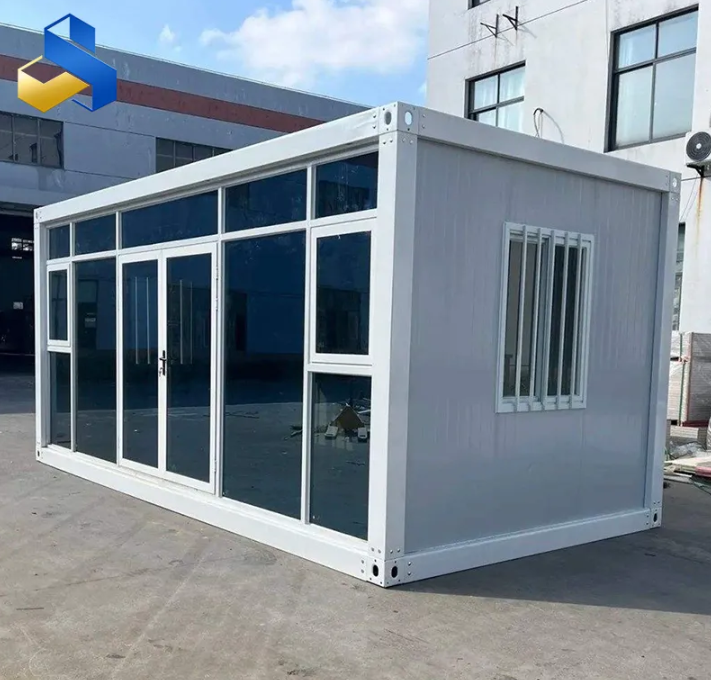
A New Kind of Home for a Changing World
For a long time, when people thought about building a house, they pictured months of messy construction, piles of lumber scattered around, and a whole lot of headaches. But something pretty exciting has been happening in the world of architecture and housing. The idea of a modular container house has stepped out of the industrial shadows and into the spotlight of modern living. It turns out those big steel boxes that travel across oceans on cargo ships are actually incredible building blocks for homes. And it's not just about being trendy or looking cool, though they definitely do. It's about rethinking how we live, how we use resources, and how we can create spaces that are both comfortable for us and kinder to the planet. A modular container house represents a genuine step towards a more sustainable and practical future, one where building a home doesn't have to mean building a giant carbon footprint.
Speed and Efficiency in Construction
Let's be honest, traditional construction can be a slow and painful process. You wait for the weather to clear up, you wait for materials to arrive, you wait for different crews to finish their part of the job. It can drag on for months or even years. This is where the magic of a modular container house really shines. The core of the structure is already there. That big, sturdy steel frame has already been welded together in a factory, often thousands of miles away, and it's designed to handle the roughest seas on the planet. When you decide to go the modular route, the bulk of the work happens off site. The walls get framed, the insulation goes in, the windows are cut, and even the wiring and plumbing can be pre installed, all inside a controlled factory environment. By the time that container arrives on your land, it's not a pile of raw materials. It's a pre built module ready to be set on a simple foundation.
What's even more impressive these days is how the industry has evolved beyond just using standard shipping containers. Forward thinking manufacturers like GOUYU have developed a whole range of foldable and flat pack systems that take speed and efficiency to another level entirely. Imagine a Z type foldable container house that arrives on a truck looking like a compact, ultra thin package. In a matter of minutes, the roof and walls unfold and lock into place, creating a fully framed room right before your eyes. For projects that need a bit more headroom, there's the waist section foldable design, which compresses vertically for space saving transport but expands into a sturdy, durable living or working area. And if you're looking for maximum flexibility, the flat packed option ships as a neat stack of prefabricated panels, ready to be assembled on site like a giant piece of furniture. There's even a detachable container house system that uses tool free fast splicing, meaning you can have a temporary command center or field office up and running almost instantly. For many projects, the on site work can be completed in a fraction of the time it would take to stick build the same space. That means less disruption to your life, less labor cost, and a much faster move in date.
Strength and Durability You Can Count On
Some people hear "shipping container" and they imagine a cold, clunky metal box that might blow over in a strong wind. The reality is completely the opposite. These containers are engineered to be absolute beasts. They are made from heavy gauge Corten steel, the same kind of steel used in bridges and massive outdoor structures. They are designed to be stacked nine high on a ship in the middle of a hurricane, loaded with twenty tons of cargo. That kind of structural integrity translates directly into a home that is incredibly secure. You don't have to worry much about termites eating through the frame or wood rot setting in after a few rainy seasons. With proper maintenance and a good coat of paint, the steel frame can last for decades.
Moreover, when a skilled fabricator gets involved, they reinforce the structure even further when they cut out openings for big windows or sliding doors. And let's not forget that these foldable systems are engineered with remarkable precision. They boast strong seismic resistance and deformation resistance, which is crucial in areas prone to earthquakes or shifting soils. The sealing performance is excellent too, keeping out wind, rain, and dust. Whether you choose a Z type folding model for a remote construction camp or a flat pack version for an emergency clinic, you're getting a structure that is waterproof, fireproof, and highly resistant to corrosion. You can rest easy knowing that your home or workspace offers a level of protection and resilience that many standard wood frame houses simply cannot match.
An Eco Conscious Choice from Start to Finish
Sustainability is a word that gets thrown around a lot, but when it comes to a modular container house, the green credentials are built right in from the ground up. First, and perhaps most obviously, you are recycling. There are literally millions of shipping containers sitting empty in ports around the world because it's often cheaper to build new ones than to ship the empty ones back. Giving one of these steel giants a second life as a home prevents it from becoming scrap metal. But the environmental benefits go much deeper than just the steel shell.
Remember how most of the work is done in a factory? That controlled setting reduces construction waste dramatically. Instead of cutting boards on site and tossing the scraps in a dumpster, factory floors are optimized to use nearly every inch of material. Insulation like rock wool or polyurethane is cut precisely with minimal leftovers. Furthermore, the design of a container home naturally lends itself to energy efficiency. The narrow width makes them easy to heat and cool, and the robust steel frame combined with modern spray foam or panel insulation creates an incredibly tight thermal envelope. And here's something else to consider with these newer flat pack and foldable systems: they are even more efficient to transport. A Z type folding unit compresses down to a fraction of its deployed size, meaning one truck can carry multiple units in a single trip. Fewer trucks on the road means fewer carbon emissions. It's a building method that asks for less from the grid and gives back more to the environment.
Customization and the Freedom of Design
There is a common misconception that living in a box means you have to think inside the box. Nothing could be further from the truth. The modular nature of a modular container house is actually a creative playground for architects and homeowners alike. Because they come in standard sizes, they act like giant Lego blocks for adults. You can place one unit on a beautiful hillside for a minimalist tiny home experience. Or you can stack two or three of them at right angles to create a sprawling, multi story residence with a rooftop deck.
The beauty of these newer foldable and flat pack systems is their incredible flexibility. With a flat pack container house, you're not locked into a fixed width or length. The prefab panels can be combined in countless ways to create custom layouts tailored to your exact needs. Need a large open space for a conference room or a mess hall? Just connect several modules together side by side. Want separate rooms for a dormitory with attached kitchens and bathrooms? The modular components make it easy to partition the interior however you like. The detachable container house models are perfect for creating temporary command centers that can be reconfigured as the project evolves. Inside, the possibilities are endless. You can leave the industrial corrugated walls exposed for a rugged, urban loft feel, or you can cover them with smooth drywall and wood paneling for a look that is indistinguishable from a traditional high end home. It's this flexibility that allows a container home to adapt to any landscape or personal style.
Portability and Versatile Applications
One of the coolest, and often overlooked, benefits of this building method is the inherent portability. A traditional house is fixed to the ground forever. A modular container house, while often placed on a permanent foundation, can actually be moved if the need arises. Since it was originally built to be lifted by cranes and hauled by trucks, the structure is uniquely prepared for relocation. This opens up a world of possibilities that go far beyond just a regular suburban home.
The foldable systems take this portability to a whole new level. Take the Z type foldable container house as an example. When folded, it's ultra compact and incredibly easy to transport. You can drop it onto a remote construction site and have temporary living quarters ready for workers in less than an hour. The waist section foldable design is ideal for on site offices and crew dormitories because it offers a bit more interior volume while still being easy to store and move. Flat packed container houses are a lifesaver for emergency settlements and medical clinics. When a natural disaster strikes, you can ship a batch of flat panels to the affected area quickly and assemble them into safe, weatherproof shelters without needing heavy equipment or specialized labor. And for military or industrial applications, the detachable container house with its tool free fast splicing is perfect for setting up temporary command posts that can be taken down and redeployed somewhere else in a matter of hours. The ability to pick up and move if life takes you elsewhere provides a level of freedom that is rare in the world of real estate.
Building a Smarter Future One Container at a Time
As we look down the road, it's becoming increasingly clear that we need to be smarter about how we build our communities. The old ways of doing things are putting too much strain on our wallets, our time, and our planet. The modular container house isn't just a quirky alternative or a passing architectural fad. It represents a fundamental shift in mindset. It proves that a home can be both highly desirable and deeply responsible. It can be built faster, last longer, cost less in the long run, and leave a much lighter footprint on the earth.
With innovations like Z type folding systems, waist section foldable units, flat pack panels, and detachable components, the industry has evolved far beyond simply repurposing old shipping containers. Today, you can choose a solution that's perfectly matched to your specific needs, whether that's a compact temporary shelter, a spacious modular office complex, or a permanent custom home. The robust steel construction offers outstanding seismic resistance, fireproofing, and corrosion resistance, ensuring these structures can stand up to harsh environments and heavy use. As more people discover the comfort, durability, and style that these steel structures can offer, we're likely to see container architecture moving from the fringes of design magazines right into the mainstream of how we think about home. It's a smart, sustainable, and solid step forward, proving that sometimes the best way to build for the future is to reuse something strong and simple from the past.