
 EN
EN
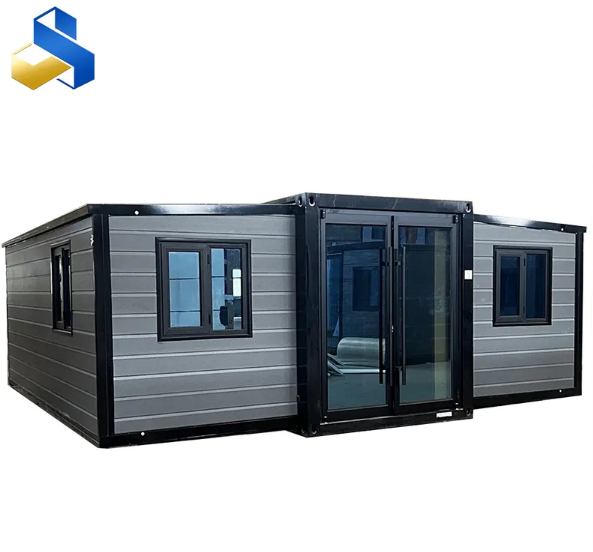
The City Squeeze Is Real
Anyone who has tried to find an affordable apartment in a major city knows the struggle. Rents keep rising, square footage keeps shrinking, and the idea of actually owning a place feels further away every year. But what if the problem is not just about money, but about the type of housing we keep building? An expandable container home offers a fresh way to think about urban living, one that prioritizes smart design over sheer size.
Making Every Inch Count
The most obvious advantage of an expandable container home in a city setting is how efficiently it uses space. In its folded state, the unit occupies a minimal footprint for transport and storage. Once expanded on-site, it delivers a living area that can be two to three times the folded dimensions. A 20-foot folding unit, for example, can unfold to provide approximately 36-37 square meters of usable interior space, comparable to a comfortable studio apartment.
Open-plan layouts create visual continuity. When the kitchen flows into the living area and the sleeping space is tucked into a clever alcove, the whole unit breathes. Large windows pull in natural light, which further expands the sense of space. It is a completely different experience from a traditional studio apartment with one small window and a cramped layout.
Lower Costs Across the Board
Affordability is the other big win. A traditional apartment in a desirable urban neighborhood can cost a fortune. An expandable container home, by contrast, is prefabricated in a factory, which keeps construction costs down. The compact folded state means dramatically lower shipping costs compared to conventional prefab units. A single truckload can deliver multiple units, and each unit can be placed on small lots, rooftops, or underutilized urban spaces that would never support a conventional building.
Beyond the purchase or rental price, ongoing expenses stay low too. High-quality insulated panels and energy-efficient appliances mean utility bills do not spiral out of control. Smart systems optimize heating and cooling based on occupancy. Over the long term, those savings add up.
Fast Setup, Minimal Disruption
Traditional construction in a city is a nightmare. Noise, dust, traffic blockages, and months, sometimes years, of disruption for the neighborhood. An expandable container home arrives folded on a standard truck. It gets lifted into position, unfolded by a small crew, and connected to utilities, often within a single day. The impact on the surrounding area is dramatically reduced. For cities trying to add housing stock quickly and quietly, this is a huge practical advantage.
Design That Fits Anywhere
Cities are full of awkward, leftover spaces. Narrow gaps between buildings, empty rooftops, abandoned parking lots, small infill lots that developers ignore because a standard apartment building does not pencil out. An expandable container home slots into these spots perfectly. Its compact folded footprint and self-contained design mean it does not need a massive foundation or extensive site preparation. It turns unusable land into livable space.
A Lifestyle Shift Worth Considering
Living in a smarter, more efficient space changes how you live in subtle but meaningful ways. You accumulate less clutter because storage is intentional and limited. You spend more time outside because the city becomes your extended living room. You have more financial breathing room because housing costs are not eating up half your paycheck. None of this feels like a sacrifice. It feels like a trade up.
The urban housing crunch is not going to solve itself. Traditional approaches are not working fast enough or affordably enough for most people. An expandable container home does not claim to fix everything overnight, but it does offer a practical, livable, and genuinely appealing alternative. For city dwellers who are tired of compromising, that is worth a serious look.