
 EN
EN
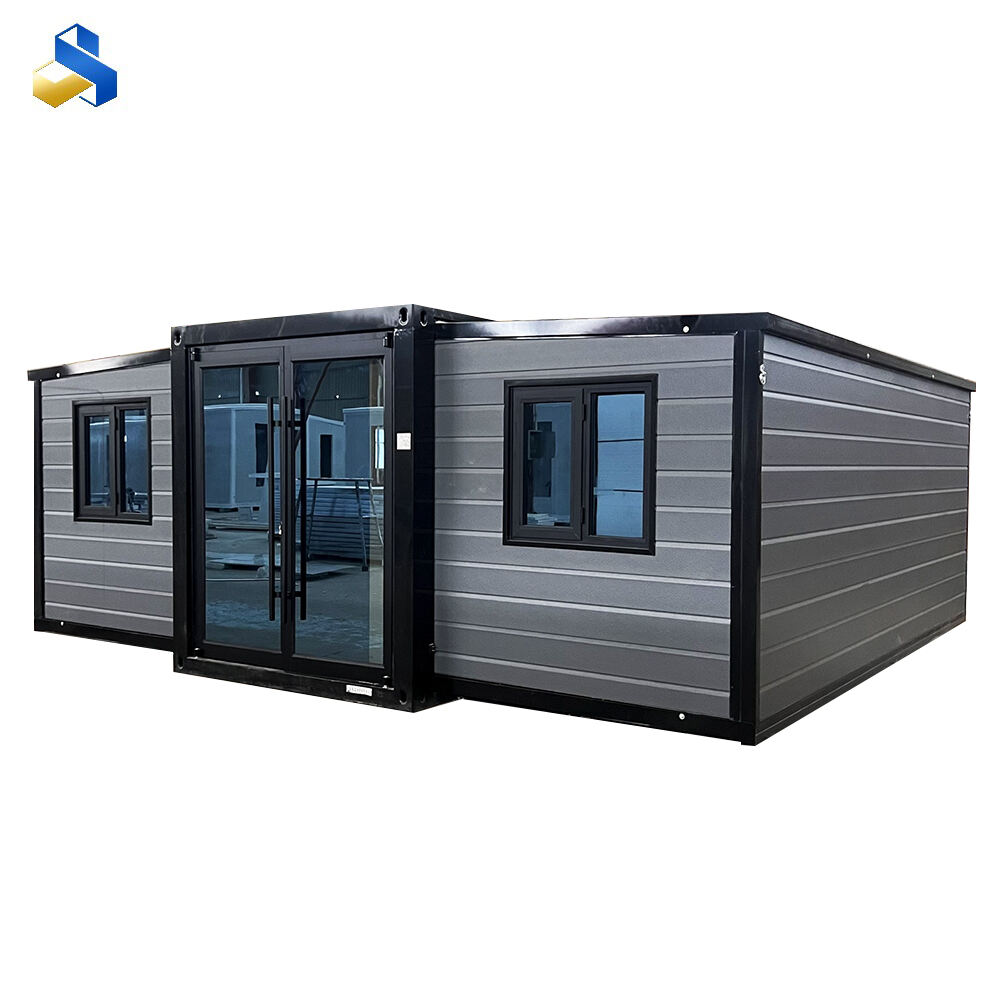
How Expandable Container Houses Are Redefining Modern Living
Container houses that expand are changing how we think about housing both in cities and out in the country because they bring together the best of portable and permanent living. These homes have slide out parts, walls that fold down, and modules that stack on top of each other, so when deployed they actually give people between 40 to 200 percent more space to work with. The cool thing is this design solves some big problems at once. First off, there's the housing crisis affecting around 1.6 billion folks according to UN Habitat from last year. Plus, there's definitely more interest than ever before in building things sustainably. Looking at what people want these days, studies show most buyers care a lot about getting something that goes up fast usually within 48 hours but still lasts forever without falling apart.
Key Drivers Behind the Popularity of Expandable Container Homes
Three core factors are driving widespread adoption:
- Affordability: At $70–$150 per sq. ft., they cost significantly less than traditional homes ($150–$300 per sq. ft.) (Modular Building Institute 2024)
- Regulatory flexibility: Thirty-two U.S. states now classify expandable units as “temporary dwellings,” easing compliance with zoning regulations
- Sustainability: Constructed from 85% recycled steel, these homes reduce carbon emissions by up to 30% compared to concrete-based builds
Innovative Companies Shaping the Future
Manufacturers across the globe are pushing boundaries with materials that resist corrosion and roofs that integrate solar panels right from the start. A company based in East Asia recently came out with something pretty remarkable - they call it a dual mode unit. Basically, it starts life as a small workspace measuring around 150 square feet but can be expanded later into what amounts to a full sized family dwelling covering approximately 450 square feet. What really stands out though is their attention to detail when it comes to keeping heat out during summer months and holding up against extreme weather conditions. The joints between sections have been specially designed to survive hurricane force winds clocking in at 150 miles per hour according to tests conducted in controlled environments. These innovations are gradually changing how we think about durability and overall building performance standards within the construction sector today.
Engineering the Transformation: How Expandable Container Houses Work
Mechanics of Expansion: Sliding, Folding, and Modular Deployment Systems
There are basically three ways these expandable homes work: sliding parts that stick out, foldable panels, and stackable modules. When someone opens those slide-out sections, they're essentially getting extra room inside, similar to what happens in an RV but often with much better results. Some stats suggest interior space can actually triple when expanded (Modular Building Institute found this in their 2023 research). The folding versions have those clever steel panels that swing up and down, letting homeowners add balconies or even build another floor on top. And for bigger projects where multiple units need to come together, there's special hardware that connects all the pre-made pieces so everything fits together like puzzle pieces within hours rather than weeks.
Structural Integrity During Expansion: Materials and Engineering Standards
These units are constructed from strong weathering steel that has a minimum yield strength around 345 MPa, plus they feature reinforced corners for extra durability when going through expansion cycles. The majority of systems actually use a combination approach where primary frames are welded together and then secondary supports are added as bolts that secure themselves firmly after deployment. Looking at recent industry reports from 2024, it seems the top fold-and-slide designs not only comply with ISO 1496 safety requirements for cargo containers but can also handle pretty heavy snow loads reaching about 70 pounds per square foot. That kind of performance makes them suitable for various applications across different climates.
Case Study: Expansion Process of a Leading Manufacturer’s Model
A top Asian manufacturer’s prototype demonstrates efficient transformation:
- Stage 1: Hydraulic jacks level the 20ft base unit
- Stage 2: Side walls slide outward on polymer-coated rails
- Stage 3: Roof panels unfold via scissor hinges
- Final Check: Automated sensors verify joint alignment
This process expands a 160 sq ft unit to 480 sq ft in just 38 minutes, maintaining tight tolerances under 3mm—ideal for rapid-response housing needs.
Maximizing Space and Customization in Expandable Container Homes
Design strategies for space optimization in expandable container houses
Today's modern designs can actually offer around 30 percent more usable area compared to traditional static models thanks to clever vertical storage solutions and areas that serve multiple purposes. According to recent data from the Modular Building Institute (2023), about 8 out of 10 owners really care about getting the most bang for their buck when it comes to space efficiency. That explains why we're seeing things like foldable partitions between rooms and retractable outdoor spaces becoming pretty much standard features these days. Designers are also turning to parametric software tools to fine tune everything from how air moves through a space to maximizing sunlight exposure and making sure people can move comfortably within the environment long before any actual construction starts happening.
Smart interiors: Transformative furniture and hidden storage solutions
- Sliding kitchen islands double as workspaces
- Murphy beds with integrated shelving
-
Staircase drawers providing over 15 cubic feet of concealed storage
These features respond to the 68% user demand for clutter-free living (2024 Compact Housing Survey), enabling even 400 sq ft units to comfortably house families of four.
Before and after: Real-world examples of spatial transformation
In Japan, a 20ft container was expanded into a 720 sq ft residence using telescoping walls and a cantilevered upper floor. Post-occupancy surveys showed a 40% increase in satisfaction compared to fixed container homes, particularly due to the seamless transition between compact and expanded configurations.
Modular design principles enabling personalized layouts
Three key principles guide successful modular design:
- Component interchangeability (walls, floors, mechanical systems)
- Tolerance stacking for cross-manufacturer compatibility
- Plug-and-play utility connections
This approach allows homeowners to reconfigure room layouts annually without structural changes—a feature adopted by 43% of users (2023 industry data).
Customization options: Windows, partitions, finishes, and bespoke configurations
The 2023 Expandable Housing Materials Report outlines 14 standardized customization tiers, ranging from basic window placement to full thermal envelope upgrades. Polycarbonate glazing delivers 90% light transmission while achieving R-8 insulation values, demonstrating how aesthetics and performance can coexist.
Cost Efficiency and Sustainable Advantages of Expandable Container Housing
Affordability Compared to Traditional Construction: Insights From Recent Housing Reports
Expandable container homes reduce upfront costs by 30–50% compared to conventional construction, thanks to factory-standardized production and reduced labor. A typical 400 sq. ft. unit costs $25,000–$40,000 installed, versus $150–$250 per sq. ft. for brick-and-mortar builds. Additional savings come from minimal foundation requirements and pre-wired utility systems, cutting on-site timelines by 60–80%.
Sustainability Advantages: Recycled Materials and Energy-Efficient Designs
Each unit repurposes shipping containers made of 89% recycled steel, saving an average of 2.3 metric tons of raw materials per home. Advanced models incorporate:
- Triple-glazed windows (reducing HVAC costs by 35–45%)
- Solar-ready roofs
- Phase-change insulation that maintains indoor temperatures between 68–72°F year-round
Lifecycle Analysis: Long-Term Savings and Reduced Environmental Impact
Over 30 years, expandable container homes deliver 62% lower lifecycle costs than traditional houses due to energy efficiency and modular repairability. A 2023 carbon footprint study found:
| Metric | Expandable Container Home | Traditional Home |
|---|---|---|
| CO2 emissions (tons/year) | 3.1 | 8.7 |
| Material waste (%) | 12 | 34 |
Their environmental benefits extend to relocation: 87% of components remain reusable after disassembly, compared to just 22% in conventional buildings.
Fast Deployment and Mobility: The Tactical Edge of Expandable Container Houses
Installation in under 60 minutes: Applications in disaster relief and remote areas
Modern emergency units come with everything already installed and feature clever sliding parts that let them go up much quicker than putting together those IKEA boxes. We've seen disaster crews get shelters operational in about an hour give or take, which makes all the difference when setting up field hospitals or finding shelter for people displaced by storms or earthquakes. The designs pass strict tests for strong winds (they hold up against gusts going around 120 km/h) and shaking from quakes too. What's really nice is they save time on building while still keeping everyone safe inside.
Portability and reuse potential across multiple locations
These modular units work great both as summer field labs and emergency shelters during winter avalanches. The design features interlocking corners and standardized sizes that make loading onto flatbed trucks straightforward for transport between sites. According to industry reports, around 92% of these units get reused after being moved over 10 times, provided they receive regular maintenance checks. That kind of durability makes them particularly valuable for remote mining sites and construction projects where base locations frequently change throughout development phases.
Strategic uses: Temporary housing, seasonal expansions, and mobile offices
- Disaster recovery hubs with built-in water filtration
- Pop-up retail spaces operational in under 24 hours
- Agricultural worker housing that folds flat off-season
- Modular classroom clusters that scale with enrollment
What to look for in quality: Insulation, certifications, and durability vs. cost trade-offs
Look for systems featuring composite panel insulation with at least an R-value of 6.5, along with expansion hardware certified under ISO 9001 standards. The cheaper entry level options might save about 35% initially, but those built with marine grade steel actually end up costing around 79% less in maintenance expenses after a decade according to recent housing durability studies from 2024. Before making a purchase decision, make sure the weatherproofing has been tested against conditions similar to what we see locally here. Some areas face intense typhoon rains while others deal with extreme cold down to minus 40 degrees Celsius during winter months. Getting this right can prevent headaches later on.
FAQ
Q: How much space do expandable container houses offer compared to traditional homes?
A: They can provide 40 to 200 percent more space than traditional homes due to their expandable nature.
Q: Are expandable container homes environmentally friendly?
A: Yes, they are made from up to 89% recycled steel and offer up to 30% reduction in carbon emissions compared to typical constructions.
Q: What is the cost comparison between expandable container homes and traditional homes?
A: They are generally 30–50% less expensive, with costs ranging from $70–$150 per sq. ft. compared to $150–$300 per sq. ft. for traditional homes.
Q: How quickly can an expandable container home be set up?
A: Some models can be deployed in as little as 38 minutes, which is why they are highly valued for rapid deployment in scenarios like disaster relief.
Q: Can expandable container homes withstand harsh weather conditions?
A: Yes, they are designed to withstand hurricane-force winds and severe weather conditions, meeting various safety standards.
Table of Contents
- How Expandable Container Houses Are Redefining Modern Living
- Key Drivers Behind the Popularity of Expandable Container Homes
- Innovative Companies Shaping the Future
- Engineering the Transformation: How Expandable Container Houses Work
-
Maximizing Space and Customization in Expandable Container Homes
- Design strategies for space optimization in expandable container houses
- Smart interiors: Transformative furniture and hidden storage solutions
- Before and after: Real-world examples of spatial transformation
- Modular design principles enabling personalized layouts
- Customization options: Windows, partitions, finishes, and bespoke configurations
- Cost Efficiency and Sustainable Advantages of Expandable Container Housing
-
Fast Deployment and Mobility: The Tactical Edge of Expandable Container Houses
- Installation in under 60 minutes: Applications in disaster relief and remote areas
- Portability and reuse potential across multiple locations
- Strategic uses: Temporary housing, seasonal expansions, and mobile offices
- What to look for in quality: Insulation, certifications, and durability vs. cost trade-offs
- FAQ