
 EN
EN
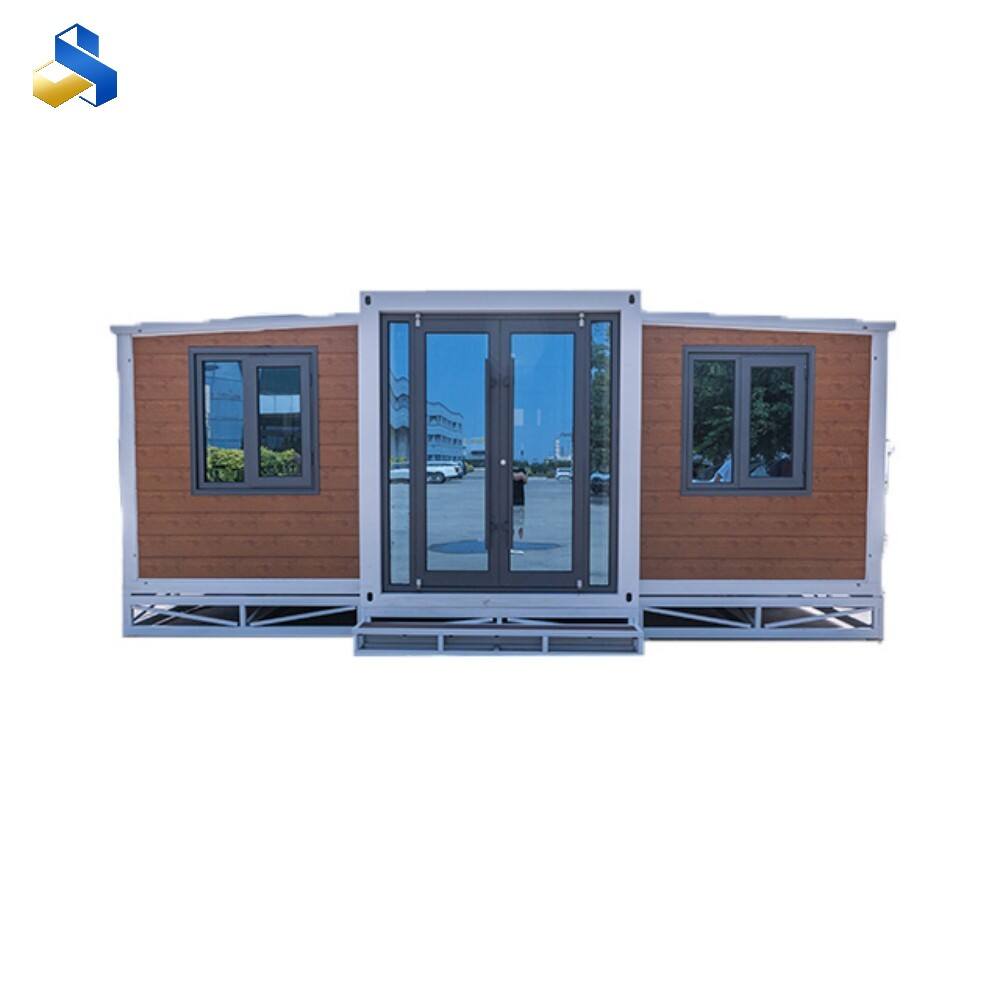
The Modular Foundation: Understanding Expandable Container House Flexibility
Modular Layouts and Expansion Options in Expandable Container Houses
Container homes that can expand are built around modular concepts featuring things like sliding rooms, collapsible walls, and units that can be stacked together. What's really impressive is how fast these setups work their magic. A basic 20 foot container can turn into about 400 square feet of living area within half an hour or so. Most of them stick to standard ISO container sizes, which are typically 8 feet wide, and rely on those telescoping steel frames that let the structure grow either sideways or upwards. The best part? Certain designs actually become two story cabins when folded floors come down and pre-made stairs pop into place. This kind of quick expansion doesn't compromise strength either, making it possible to scale up living spaces rapidly while keeping everything solid and secure.
Why Flexibility and Customization Define Modern Portable Living Spaces
The rise of portable living is driven by evolving urban and rural needs. Unlike fixed traditional homes, expandable container houses offer dynamic adaptability:
- Floorplan reconfiguration: Swap kitchen and bedroom modules seasonally
- Climate responsiveness: Add insulation panels in winter or shaded outdoor decks in summer
- Energy system upgrades: Solar roof compatibility has increased by 240% since 2020 (Modular Construction Institute)
This flexibility supports diverse lifestyles—from remote work to off-grid living—making adaptability a core requirement rather than a luxury.
Data-Driven Demand: 90% of Users Prioritize Scalable Space in Urban and Rural Settings (2023 Modular Living Survey)
| Urban Use | Rural Use | |
|---|---|---|
| Expansion Frequency | 2.3x/year (avg) | 1.1x/year (avg) |
| Top Expansion Reasons | Home offices (68%) Guest rooms (24%) |
Equipment storage (55%) Livestock shelters (33%) |
According to the 2023 Modular Living Survey of 1,200 users, 89% modified their layout within the first year—confirming that scalable space is essential across environments.
Are All Expandable Container Houses Truly Adaptable? Evaluating Real-World Limitations
Despite their promise, practical constraints affect long-term adaptability:
- Fixed utility connections in 40% of pre-wired units limit relocation
- Weight distribution limits restrict vertical builds to three stories without reinforced foundations
- Material fatigue in folding mechanisms after 150+ cycles (per ASTM F2091 testing)
Innovations such as detachable plumbing clusters and carbon-fiber composite hinges—2.5x more durable than steel—are now addressing these issues, improving longevity and real-world usability.
Interior Design Strategies for Multifunctional and Efficient Living Spaces
Maximizing small spaces with multifunctional furniture and smart storage solutions
Good interior design matters a lot when dealing with compact spaces that can expand. About 72% of people who own homes really care about furniture that does double duty, as shown in last year's Modular Living Survey. Think about those sofa beds that turn into couches, dining tables that fold away, and those little ottomans that stack together. Many designers now build vertical storage walls with shelves that can be rearranged, grabbing space from areas we usually ignore overhead. There are also storage areas underneath floors where things like small appliances or stuff only used during certain seasons can go. When looking at actual numbers, studies have found that adding features like desks that fold down can free up around 34% more floor space in apartments smaller than 400 square feet. That makes a real difference for anyone trying to maximize limited living areas without feeling cramped.
Case study: Flexible interior layouts from Shandong Gouyu New Material Technology Co Ltd
Shandong Gouyu demonstrated adaptability in a 20ft container home featuring sliding partition walls for reconfiguring living and sleeping zones, retractable kitchen counters with hidden induction cooktops, and magnetic wall panels for gear storage in adventure-focused models. This approach reduced reconfiguration time by 60% compared to conventional modular designs.
Innovative ceiling-to-floor storage systems in compact expandable container homes
Designers are embedding storage into structural components to maximize efficiency:
- Staircase treads with pull-out drawers
- Ceiling-mounted bike racks operated via pulley systems
- Insulated floor cavities for climate-sensitive storage
These integrated systems triple storage density without reducing headroom, as validated in space optimization trials.
Matching interior design styles to lifestyle needs: Urban, retirement, and adventure use cases
Urban models emphasize soundproofed workspaces and built-in charging stations. Retirement units include non-slip flooring and seated showers for safety and accessibility. Adventure-ready designs feature waterproof gear lockers with drying systems, exterior equipment racks, and convertible rooftop sleeping platforms—ensuring functionality aligns with user-specific demands while preserving structural performance.
Customization Across Use Cases: From City Micro-Offices to Rural Retreats
Tailoring Expandable Container Houses for Urban Living, Retirement Communities, and Outdoor Adventures
Expandable container houses today come in all sorts of configurations to meet different requirements. Cities tend to go for designs that stack upwards and include soundproofing features, which can boost usable space by somewhere around 60 to 80 percent once they're set up. For retirement communities, the preference is usually for one level only with bigger entry points and those accessibility compliant fittings everyone talks about these days. Then there are the adventure versions built for rough terrain travel, made light enough to carry but still sturdy. Many of them have solar panels built right in so folks can camp out far from civilization without needing an electrical hook up.
Real-Life User Stories: Beachside Retreats, Pop-Up Shops, and Mobile Workspaces
A beachside rental operator expanded units from 160 to 320 sq ft during peak seasons, optimizing revenue through seasonal adaptability. Entrepreneurs are increasingly adopting hybrid pop-up designs that combine retail fronts with foldaway living quarters—27% of pop-up shop owners now use portable structures, per the Modular Living Survey.
Trend: Rising Demand for Personalized Portable Homes Among Aging Populations
Individuals aged 55–75 represent 41% of recent purchases (2023 Modular Living Survey), drawn to zero-step entryways and telehealth-ready infrastructure. These homes support downsizing while maintaining independence, with key layouts incorporating wheelchair-accessible kitchens and fall-detection sensor systems—offering a modern alternative to traditional retirement housing.
Material Innovation and Structural Adaptability in Modern Designs
How Shandong Gouyu New Material Technology Co Ltd Enhances Customizability Through Advanced Materials
Cutting-edge materials are central to seamless expansion and durability. High-performance composites allow walls to fold without compromising insulation and roofs to telescope vertically with precision. These advanced materials ensure weather resistance across configurations, enabling reliable performance in extreme climates.
Lightweight Composites Enabling Faster Reconfiguration, Transport, and Energy Efficiency
Aluminum hybrid panels—42% lighter than steel—enable faster deployment and reduce transportation costs by up to 30%. Their superior thermal efficiency lowers HVAC demands by 15–20% annually, making them ideal for applications ranging from Arctic research stations to tropical retreats. This shift enhances both sustainability and operational flexibility.
From Concept to Reality: The Step-by-Step Customization Process
Step-by-Step Guide to Designing Your Own Expandable Container House
When it comes to customization, everything starts with figuring out exactly what someone needs. This means looking at how much space they have available, checking out the actual condition of the site itself, and understanding what matters most functionally speaking — things like where work areas should go or how good the insulation needs to be. A lot of companies these days offer those cool 3D configuration tools that let customers play around with different options right on their screens. Some folks might spend hours messing with this stuff just to get it perfect. According to recent data from the Modular Living Survey in 2023, around four out of five projects end up settling on their final designs after only two or three rounds of changes. That makes sense when we think about how streamlined and focused on users these processes have become. The main steps generally follow a pretty standard path though:
- Design consultation to align goals with local zoning rules
- Material selection balancing durability and transport weight
- Expansion planning for future additions like fold-out decks or lofted bedrooms
Digital Modeling and Client Collaboration in Custom Modular Home Projects
With advanced CAD modeling, designers can tweak almost anything they want in a project, whether it's where windows go or how electricity runs through walls. The cloud has changed things too, making it possible for everyone involved - architects, engineers, even customers themselves - to work together while changes happen. This kind of teamwork cuts down on mistakes that would normally creep into designs during old fashioned methods. And then there are those VR experiences where people actually walk through their future home before construction starts. It helps them see if what's being built matches what they really need for daily living, not just what looks good on paper.
Case Study: Transforming a Single Unit Into a Two-Story Family Cabin in Just 3 Weeks
A 2023 project showcased rapid transformation:
- Week 1: Installed vertical expansion mechanism and reinforced steel frame
- Week 2: Added foldable staircase and retractable glass walls
-
Week 3: Finished interiors with built-in storage and finishes
The original 320 sq ft unit gained 110% more usable space through smart engineering, achieving 90% client satisfaction in post-occupancy feedback.
FAQ
What are expandable container houses?
Expandable container houses are structures built around modular concepts, often incorporating sliding rooms, collapsible walls, and stackable units, allowing for rapid scaling of living spaces.
How quickly can a container expand into a livable space?
A basic 20-foot container can expand into approximately 400 square feet of living area in about half an hour.
Are expandable container houses suitable for both urban and rural settings?
Yes, these houses offer flexibility and can be adapted for various uses, including urban settings, rural retreats, and more. They are designed to cater to diverse lifestyles and settings.
Can an expandable container house be relocated?
While they offer great adaptability, certain limitations such as fixed utility connections in pre-wired units can affect relocate-ability. However, innovations are improving relocation capabilities.
What are the advantages of using advanced materials in container houses?
Advanced materials enhance the durability, insulation, and structural integrity of container houses, enabling seamless expansion and weather resistance.
Table of Contents
-
The Modular Foundation: Understanding Expandable Container House Flexibility
- Modular Layouts and Expansion Options in Expandable Container Houses
- Why Flexibility and Customization Define Modern Portable Living Spaces
- Data-Driven Demand: 90% of Users Prioritize Scalable Space in Urban and Rural Settings (2023 Modular Living Survey)
- Are All Expandable Container Houses Truly Adaptable? Evaluating Real-World Limitations
-
Interior Design Strategies for Multifunctional and Efficient Living Spaces
- Maximizing small spaces with multifunctional furniture and smart storage solutions
- Case study: Flexible interior layouts from Shandong Gouyu New Material Technology Co Ltd
- Innovative ceiling-to-floor storage systems in compact expandable container homes
- Matching interior design styles to lifestyle needs: Urban, retirement, and adventure use cases
- Customization Across Use Cases: From City Micro-Offices to Rural Retreats
- Material Innovation and Structural Adaptability in Modern Designs
- From Concept to Reality: The Step-by-Step Customization Process
- FAQ