
 EN
EN
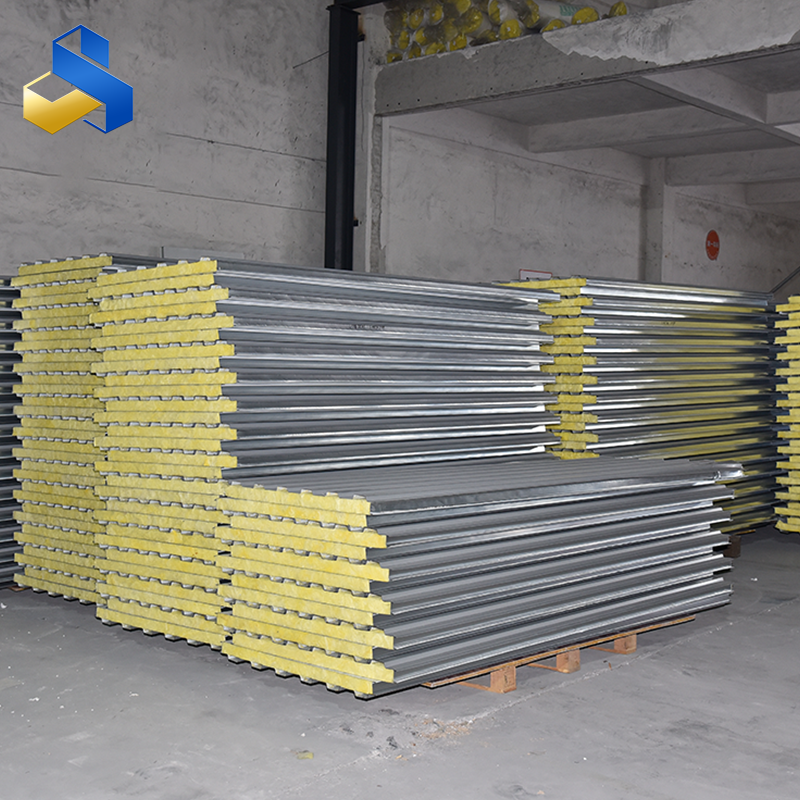
Understanding Cold-Climate Thermal Performance Requirements
ASHRAE Climate Zone 6A–7A R-value benchmarks for walls, roofs, and foundations
For builders working in really cold climates, following the ASHRAE Zone 6A to 7A insulation guidelines is pretty much mandatory these days. The requirements call for at least R-30 insulation on roofs, R-25 minimum for walls, and around R-20 under the foundation area. These numbers matter because when temps drop below freezing, poor insulation can actually boost heating costs by as much as 40% in houses built with steel frames. Steel itself is a real problem here since it transfers heat so easily. That's why continuous layers of good quality insulation become absolutely necessary to counteract what happens with thermal bridging in lightweight steel construction methods.
Addressing thermal bridging in light steel frames: why U-factor matters as much as R-value
When steel studs cut through cavity insulation, they create these little highways for heat to escape, which is what we call thermal bridging. Builders working in colder climates have found that this issue can knock down the actual R-value of walls by anywhere between 15 to 25 percent below what's listed on paper. Because of this problem, many professionals now look at U-factors instead of just R-values when evaluating building performance. The goal for structures in Zone 7A should be keeping the whole wall U-factor at or below 0.05 W/m²K. Getting there means sealing all those air leaks properly and making sure there are proper thermal breaks wherever framing components meet. And don't forget about condensation risks either. Proper placement of vapor barriers according to expected dew point calculations remains critical for preventing moisture issues inside the wall assemblies.
Moisture Management and Condensation Control Strategies
Dew Point Analysis and Vapor Barrier Placement for Intermittent Heating in Sub-Zero Environments
Getting moisture control right in those light steel villas really depends on knowing exactly what the dew point is going to be, particularly when there's intermittent heating happening in below freezing conditions. When temperatures fluctuate throughout the day, this creates real problems for condensation forming at those cold spots, especially around steel studs where warm moist air from inside hits those cold surfaces. Putting vapor barriers in the right spot matters a lot too. Usually they go somewhere between the interior walls and the insulation layer. This stops water vapor from moving through while still allowing some ability for materials to dry out if needed. According to some computer models called WUFI, even small mistakes in predicting dew points can lead to big issues. If predictions are off by just plus or minus 1.5 degrees Celsius, the chance of getting condensation goes up about 45 percent in buildings with steel frames. Here are some things worth considering for better results:
- Positioning vapor barriers within 20% of the assembly’s warm side
- Integrating thermal breaks at framing junctions
- Using capillary-active insulation (e.g., mineral wool) to safely redistribute minor moisture
Class II vs. Class III Vapor Retarders: Performance Trade-offs in Cold, Humid Winters
Vapor retarder selection balances moisture restriction with seasonal drying capacity. Below –15°C, Class II retarders (0.1–1.0 perm) generally outperform Class III (1.0 perm) in humid winters by limiting vapor drive without trapping moisture. However, in drier cold climates (RH <60%), Class III options support safer inward drying.
| Property | Class II Retarder | Class III Retarder | Cold Climate Implications |
|---|---|---|---|
| Permeability Range | 0.1–1.0 perm | 1.0–10 perm | Higher barrier = reduced condensation risk below –20°C |
| Common Materials | Kraft-faced batts, polyethylene sheets | Latex paints, vapor-retardant primers | Affects compatibility with interior finishes and service cavities |
| Humidity Flexibility | Moderate drying capacity | High drying capacity | Class II preferred where RH consistently exceeds 70% (per ASHRAE 90.1 and 160) |
For northern climates with persistent humidity, ASHRAE recommends Class II retarders to manage vapor pressure differentials. Class III remains appropriate in low-humidity cold zones where enhanced drying prevents long-term moisture accumulation.
Insulation Type Comparison for Light Steel Villas in Cold Climates
Spray foam, mineral wool, and rigid foam boards: bridging resistance, air sealing, and WUFI-validated hygrothermal performance
Selecting optimal insulation for light steel villas in cold climates requires evaluating real-world performance—not just R-value per inch. WUFI hygrothermal modeling confirms that air leakage and thermal bridging dominate energy loss in steel-framed assemblies. Key distinctions among leading options:
| Characteristic | Closed-Cell Spray Foam | Mineral Wool | Rigid Foam Boards |
|---|---|---|---|
| Thermal Bridging | Eliminates 99% of bridges | Moderate reduction | Requires meticulous detailing to avoid gaps |
| Air Sealing | Forms seamless air barrier (ACH ≤1.0) | Requires separate air/vapor membrane | Gaps risk convection loops and localized condensation |
| R-Value/Inch | R-6.0–7.0 (ASHRAE 2023) | R-4.0–4.3 | R-4.0–6.5 |
| Moisture Control | Integrated vapor retarder; impermeable | Highly permeable; dries rapidly | Impermeable; requires precise dew point alignment |
| Cold-Climate Validation | WUFI-verified for Zone 6–7A | Validated for condensation resistance in intermittent heating | Limited sub-zero field validation; sensitive to installation quality |
For buildings in ASHRAE Zone 6-7A, closed cell spray foam works really well because it covers everything in one go, stopping condensation from forming where steel studs meet. This type of insulation also gives pretty good thermal performance overall. Mineral wool is another option worth considering since it handles fires better and moves moisture around instead of trapping it somewhere. That makes it especially useful in areas that get heated up only sometimes. When using rigid foam boards though, installation has to be spot on. If there's even a small gap between panels, say about 5%, the actual insulating value drops significantly - we're talking around 38% according to Building Science Corp research from last year. Anyone working on these projects should look for materials that have been tested under real cold weather conditions through independent labs. It just makes sense when dealing with those extreme temperatures.
Integrated Solutions: Prefabrication-Friendly Options for Cold-Region Efficiency
Light steel villas made in factories tend to stay warmer in cold weather because manufacturers can control everything precisely without those annoying onsite variables that mess things up. When building happens offsite, contractors can integrate top quality insulation materials like mineral wool or rigid foam right into the steel frames. This means better coverage all around and fewer places where heat escapes or cold gets in. The result? These homes typically use about 20 percent less energy compared to regular on-site construction since their walls and roofs conduct heat at rates between 0.02 and 0.03 W/m·K consistently. During production, builders also install vapor barriers and thermal breaks which help prevent moisture buildup when temperatures drop below freezing. Plus, getting everything put together takes just weeks instead of months, saving anywhere from 30 to 50% on project timelines while still hitting all the standards set for ASHRAE Zones 6A through 7A. Insulation in these steel villas actually saves money over time too, thanks to those durable, tightly sealed envelopes that cut down on heating costs dramatically.
FAQs
What is thermal bridging?
Thermal bridging occurs when a material with high thermal conductivity, like steel, creates a pathway for heat to escape through insulation, reducing its effectiveness.
Why are vapor barriers important in cold climates?
Vapor barriers prevent moisture from passing through wall assemblies, reducing the risk of condensation and subsequent moisture-related issues inside walls.
What is the difference between Class II and Class III vapor retarders?
Class II retarders have a permeability range of 0.1–1.0 perm, suitable for high-humidity environments, whereas Class III, with a range of 1.0 perm, allows more moisture permeability, suitable for drier climates.
What are the advantages of using closed-cell spray foam for insulation?
Closed-cell spray foam provides excellent thermal performance by eliminating thermal bridges and creating a seamless air barrier, suitable for cold-climate zones.