
 EN
EN
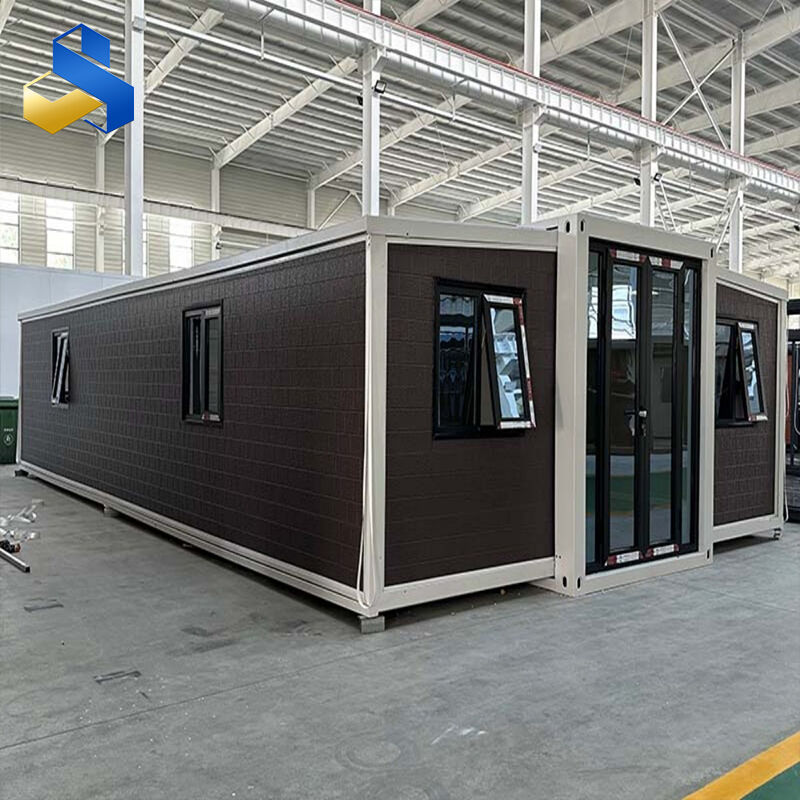
Standardize Expandable Unit Design to Accelerate Scalable Production
Why fragmented design systems cap throughput beyond 3,000 units/year
When trying to scale up production of expandable container houses past about 3,000 units per year, non-standard designs become major problems. Every custom configuration needs completely different tooling, materials have to be sourced specially, and assembly procedures vary for each project. According to the Modular Construction Report from last year, this leads to around 40% longer changeover times between projects and roughly 28% more errors during manufacturing. The whole situation messes up supply chains because inventory gets split into too many specialized parts, and workers need constant retraining for different processes. As production volumes grow, engineers keep making changes that slow things down across multiple departments. Factory managers report real headaches maintaining quality standards since every single container house ends up needing its own inspection process. All these issues basically put a wall in place at 3,000 units annually, after which the extra costs just don't make sense anymore compared to what companies could save by expanding.
How standardized unit families cut tooling changeovers by 68% and engineering time by 83%
When companies switch to 3 or 4 core unit designs with different parameter options, they see big improvements in how fast things get made. These pre-designed product families all work together because they have common connectors, same materials across the board, and shared parts that fit multiple models. Standardizing like this cuts down on tool changes by almost two thirds since each production line stays set up specifically for one family type. Engineers save loads of time too when they don't have to redraw everything from scratch every time there's a change. With digital templates, they just tweak dimensions instead of starting over completely. Buying materials in bulk makes sense economically, saving around 19% on raw materials costs. Workers on the assembly floor get really good at their specific tasks after doing them repeatedly, which means less time spent training new people (about 75% less) and fewer mistakes happening during mass production runs (defects drop by roughly 32%). All these efficiencies combined let manufacturers crank out over 10,000 units per year without sacrificing quality standards because the whole process becomes much more controlled and predictable.
Embed Multi-Stage Quality Control Across the Scaling Curve
The defect-rate inflection point: Why QC must evolve beyond manual inspection at 5,000+ units/year
When expandable container house production gets above around 5,000 units per year, manual inspections just can't keep up anymore. The numbers tell a pretty clear story too – defect rates jump somewhere between 40 and 60 percent once we pass that mark. People get tired after checking so many units day after day, and those complicated parts like sliding doors and corner connections tend to slip through unnoticed. Looking at what goes wrong in the field? About two thirds of all problems come back to defects that were missed before shipping. If companies want to grow without compromising quality, they need to move beyond random checks here and there. Investing in automated quality control systems makes sense for anyone serious about scaling their operations while maintaining standards.
Three-tiered QC protocol: Pre-fab steel validation, AI-augmented weld inspection, and post-expansion performance testing
A phased quality control framework prevents defects at critical manufacturing stages:
| Stage | Technology Application | Quality Assurance Focus |
|---|---|---|
| Pre-fabrication | Ultrasonic steel validation | Material thickness/rust resistance |
| Structural assembly | AI-powered vision weld scans | Seam porosity detection (99.2% accuracy) |
| Post-production | Robotic expansion cycle tests | Waterproofing and alignment verification |
Before any cutting happens, prefab validation checks steel grades using electromagnetic tests to make sure everything meets standards. While parts are being fabricated, computer vision systems armed with deep learning tech scan weld seams as they form. These systems catch tiny cracks that even experienced eyes might miss during regular inspections. The last step involves automated expansion rigs that go through over 200 simulated deployment cycles. Throughout this process, various sensors keep track of how much structures bend and whether seams hold up under stress. Field failures drop around three quarters when following this multi-step approach instead of just one quick check at the end. For companies making thousands of modular homes each year, this kind of thoroughness makes all the difference between satisfied customers and costly repairs down the road.
Solve Critical Field-Performance Gaps in Rust, Insulation, and Seams
Root-cause analysis: How thermal bridging and seam failure drive 73% of field quality complaints
Looking at how these expandable container homes perform in real world conditions shows that problems with heat leakage through structural joints and failed seams make up about 75% of complaints after installation. Most of these troubles come down to metal frames that aren't properly insulated, which creates those annoying cold spots. The panels where they join together often lack proper waterproofing too. And let's not forget about the substructures that tend to corrode over time. When there are big temperature differences across expansion joints, moisture gets in and speeds up the rust process while also breaking down the insulation. This leads to significant energy losses, sometimes over 30%, in containers that have these issues.
Proven material and process upgrades: ZAM-coated substructures + robotic polyurethane seam injection
Many top manufacturers are turning to zinc-aluminum-magnesium or ZAM alloy coatings for their structural steel these days. These coatings stand up to corrosion way better than regular galvanized steel, showing about five times the protection when tested under accelerated salt spray conditions. When it comes to keeping seams intact, companies are using robotic systems that inject polyurethane with around 0.2 millimeter accuracy into gaps. This creates solid thermal barriers across joints without any bridging issues. The combination of these two methods cuts down on failures caused by moisture by roughly 89 percent, all while still allowing the structure to flex naturally as units expand and contract over time.
Implementation note: Transitioning to ZAM components requires recalibrating welding parameters to accommodate the alloy's higher melting point.
Integrate Digital Twin and Lean Workflow Systems for Predictable Scale
Scaling up production of expandable container houses requires getting the balance right between what happens on the factory floor and what's happening in the digital world. Digital twin technology basically creates a mirror image of how things work in manufacturing, letting companies see where materials get stuck and spot weak spots in structures before problems actually happen in real life. Combine this with lean manufacturing techniques such as value stream mapping, and factories can cut out unnecessary steps in their processes. Some manufacturers have reported cutting lead times down by around 27% without compromising on quality standards, which typically need to stay below 1.5mm tolerance levels. These integrated systems also help with predicting when machines might break down, reducing unplanned downtime by about 40% thanks to sensors that constantly monitor equipment conditions. Modular housing plants aiming to produce over 10,000 units per year find these tools invaluable for making smart decisions about resources, workforce productivity, and keeping the supply chain stable. Simulations allow producers to foresee issues related to temperature changes affecting materials or inconsistent seams appearing in walls, so quality remains consistent even when ramping up production quickly. What we end up with is a production setup that grows efficiently while still meeting those tough durability requirements needed for mass producing modular homes at scale.
FAQ
Why are non-standard designs a problem for scalable production?
Non-standard designs create issues like longer changeover times and more errors during manufacturing, as they require different tooling and materials. This leads to fragmented supply chains and complicates quality control, capping effective production to around 3,000 units per year.
How do standardized unit families improve production?
They reduce tooling changes and engineering time significantly. By using common connectors and shared parts, standardized designs streamline the production process, allowing for higher output and better quality control.
What is the role of automated quality control in scaling production?
Automated quality control systems replace manual inspections, providing more accurate defect detection and improving overall quality assurance as production scales beyond 5,000 units per year.
How do digital twin and lean workflow systems aid in scaling production?
They provide a digital representation of manufacturing processes, identifying bottlenecks and potential issues. Combined with lean techniques, they improve resource allocation, reduce lead times, and lower unplanned downtime.