
 EN
EN
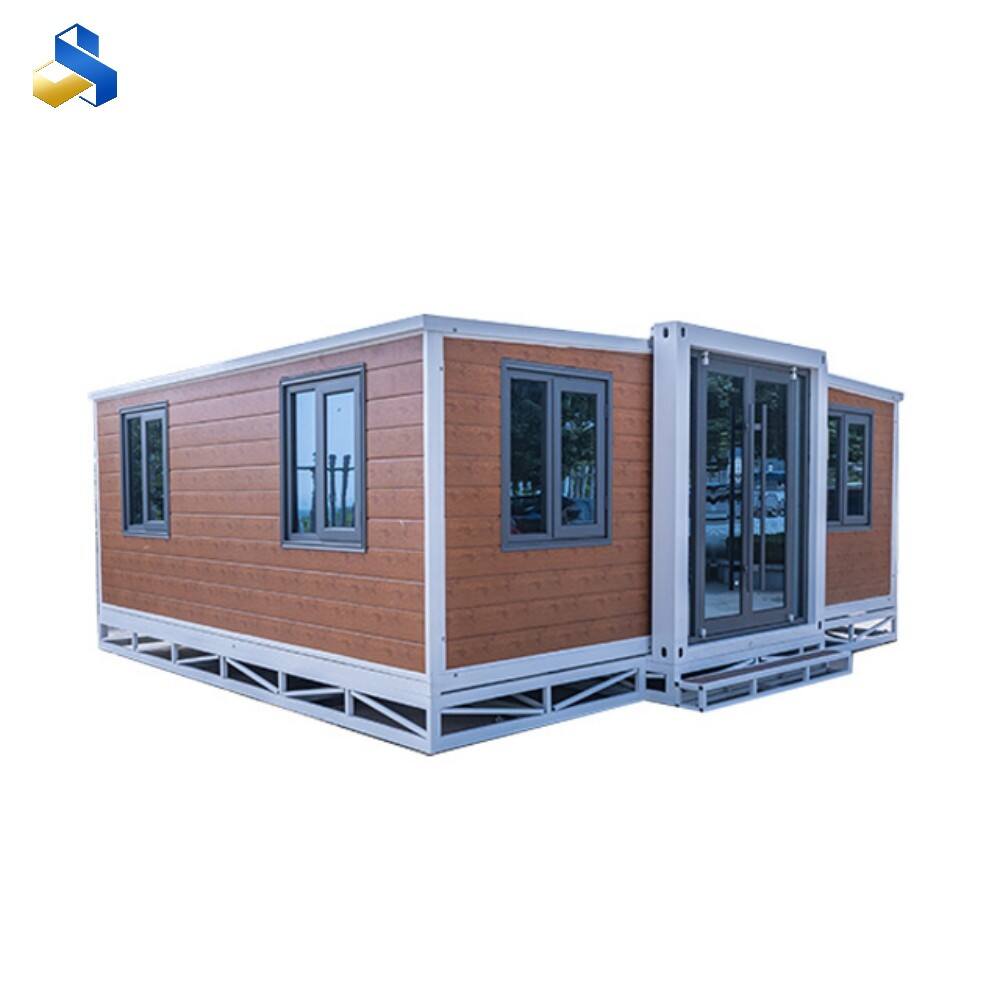
The Global Housing Crisis and the Emergence of Expandable Container Houses
Rising Urbanization and the Urgent Need for Scalable, Affordable Housing Solutions
Urban populations have grown by 25% since 2000, straining aging infrastructure and inflating traditional construction costs by 19% since 2021. This convergence has created a critical shortage: 3 out of 5 city dwellers in developing nations spend over 35% of their income on substandard housing.
How Expandable Container Houses Offer a Rapid, Sustainable Response to Housing Shortages
Container-based housing solutions are making waves in solving the current housing shortage problem thanks to their modular approach which can slash construction time down around 60%. Built from old shipping containers that get a second life, these structures actually become fully weather resistant shelters within just over three weeks most of the time. What makes them really special is how they fold down for transport. This means getting them to places where roads are bad or after disasters happens at about one third the usual cost. And when space is tight in big cities? Just stack them vertically! The real estate savings alone make these containers worth considering for urban developers looking to maximize every square foot available.
Key Data Insight: 1.6 Billion People Lack Adequate Shelter – The Role of Modular Container Homes
With 1.6 billion people lacking adequate shelter (UN-Habitat 2023), expandable container homes currently house 2.1 million worldwide. Each 40-foot unit can accommodate eight residents and reduce per-person construction emissions by 72% compared to concrete buildings, making them especially effective in high-growth urban regions.
Sustainability and Environmental Impact of Repurposed Shipping Containers
Reducing construction carbon footprint with recycled steel and modular design
Expandable container houses reduce the construction sector’s carbon emissions by up to 35% compared to conventional methods. By repurposing steel from decommissioned shipping containers, they avoid the energy-intensive production process—each container reused prevents approximately 7,700 kg of CO2 emissions.
Waste diversion: One expandable container house recycles ~3,500 kg of steel from landfills
Globally, an estimated 17 million shipping containers sit unused. Repurposing just one for housing diverts about 3,500 kg of steel from scrap yards—equivalent to 2.5 mid-sized vehicles—supporting a circular economy that tackles both industrial waste and housing insecurity.
Lifecycle comparison: Container homes vs. traditional buildings in environmental impact
| Metric | Expandable Container Home | Traditional Brick Home |
|---|---|---|
| Construction waste | 85-90% less | 8-10 tons average |
| Build time emissions | 2.1 tons CO2 | 4.8 tons CO2 |
| Material recyclability | 92% steel reuse potential | <35% concrete recycling |
Critical perspective: Are all expandable container houses truly sustainable?
While the structural reuse of steel is inherently sustainable, full environmental benefits depend on holistic design choices. Optimal performance requires non-toxic insulation, solar-ready roofs, and water-efficient systems. Poorly insulated or improperly sited units may increase energy consumption by 18–22%, underscoring the importance of climate-responsive engineering.
Cost Efficiency: How Expandable Container Houses Reduce Building Expenses
Affordable innovation: Up to 40% cost savings compared to traditional construction
Container homes actually cost around 40 percent less than regular construction according to recent studies from GZUvo in 2024. Why? Well, they reuse existing materials which saves money on raw stuff upfront. Plus, putting them together is much quicker because everything fits like puzzle pieces, so we need way less workers on site too. The whole process goes from planning to living space in record time, which means less money sitting around waiting for completion. And here's something interesting: most projects only need about 82% fewer experts compared to traditional methods. That doesn't mean corners are cut though. These container homes still meet all building codes and safety standards, just with smarter resource management throughout the entire process.
Detailed cost breakdown: Container homes versus brick-and-mortar housing
| Cost Factor | Expandable Container Home | Traditional Construction |
|---|---|---|
| Construction Time | 8-12 weeks | 6-18 months |
| Material Costs | $15,000-$25,000 | $50,000+ |
| Labor Costs | $8,000-$12,000 | $35,000-$60,000 |
| Maintenance (10-year) | $2,500 | $12,000 |
The steel-reinforced structure results in 72% lower maintenance costs over ten years compared to wood-frame buildings.
Case Study: Shandong Gouyu’s prefab container housing projects in Southeast Asia
In Vietnam and Indonesia, Shandong Gouyu deployed 200-unit communities within eight weeks, achieving 60% cost reduction versus local construction norms. These developments feature hybrid solar-grid systems that reduce energy costs by 35% and have housed over 12,000 residents since 2022—all at under $18/sf, a figure 44% below regional affordable housing benchmarks.
Design Flexibility and Customization in Modern Expandable Container Homes
From Compact Units to Multi-Story Complexes: Scalable Design Options
Modern expandable container houses support diverse configurations through modular stacking and collapsible walls. According to a 2023 Modular Building Institute report, 73% of urban housing projects now incorporate prefabricated elements, with container-based systems leading scalable solutions.
| Configuration | Floor Area | Ideal Use Case | Deployment Time |
|---|---|---|---|
| Single-unit | 300-500 sqft | Solo living/Home offices | 2-4 days |
| Multi-story complex | 2,000+ sqft | Apartment buildings | 3-6 weeks |
Modular Architecture Enabling Fast Deployment
The modularity of these units enables rapid assembly in disaster zones, with NGOs reporting setup times 60% faster than traditional emergency shelters. During the 2023 Türkiye-Syria earthquake response, container villages provided shelter for 12,000 displaced people within ten days.
Innovation Trend: AI-Powered Platforms for Personalized Designs
Manufacturers now offer 3D configuration tools that allow users to customize layouts, finishes, and energy systems digitally. These AI-driven platforms reduce design errors by 42% (Construction Tech Review, 2023) and support climate-specific features like integrated solar panels and rainwater harvesting.
Global Applications: Workforce Housing, Urban Living, and Beyond
Expandable Container Houses as Workforce Housing in Mining and Construction Sectors
Industries such as mining and construction increasingly rely on expandable container houses to meet temporary housing demands. A 2023 Global Workforce Solutions Report found modular units reduce costs by 33% while offering durable, weather-resistant accommodations in remote locations. For example, a Canadian mining operation deployed 120-unit container complexes near extraction sites, accelerating crew rotation by 80% compared to traditional site-built options.
Urban Micro-Living Solutions in Tokyo, Amsterdam, and Los Angeles
Space-constrained cities are adopting vertical container housing to maximize density. Tokyo’s 2024 Urban Redevelopment Initiative converted stacked containers into 480 micro-apartments near transit hubs, achieving 60% higher density than conventional mid-rise buildings. In Amsterdam, the Schiphol Container Community provides airport staff with compact 28 m² units featuring fold-out terraces, reducing commute times for 74% of residents.
Regional Adoption Trends Across Africa, Asia, Europe, and North America
Africa leads in adoption for humanitarian purposes, with container homes meeting 58% of refugee shelter needs (UNHCR 2023). Asian markets emphasize smart technology integration, Europe prioritizes carbon-neutral designs aligned with EU Green Building Standards, and North America sees 21% annual growth in container-based emergency housing due to updates in FEMA’s 2024 Disaster Response Framework.
FAQ
What are expandable container houses?
Expandable container houses are modular homes constructed from recycled shipping containers. They offer a cost-effective, durable, and eco-friendly alternative to traditional housing.
How do container houses compare in cost to traditional construction?
Container houses typically cost around 40% less than traditional construction methods due to their use of existing materials and faster building times.
Are container homes environmentally friendly?
Yes, container homes significantly reduce carbon emissions by repurposing steel from unused shipping containers and require less energy for construction compared to traditional buildings.
What are some global applications of container houses?
Container houses are used globally for workforce housing in remote areas, urban micro-living solutions in space-constrained cities, and humanitarian aid for disaster and refugee relief.
Table of Contents
- The Global Housing Crisis and the Emergence of Expandable Container Houses
-
Sustainability and Environmental Impact of Repurposed Shipping Containers
- Reducing construction carbon footprint with recycled steel and modular design
- Waste diversion: One expandable container house recycles ~3,500 kg of steel from landfills
- Lifecycle comparison: Container homes vs. traditional buildings in environmental impact
- Critical perspective: Are all expandable container houses truly sustainable?
- Cost Efficiency: How Expandable Container Houses Reduce Building Expenses
- Design Flexibility and Customization in Modern Expandable Container Homes
- Global Applications: Workforce Housing, Urban Living, and Beyond
- FAQ