
 EN
EN
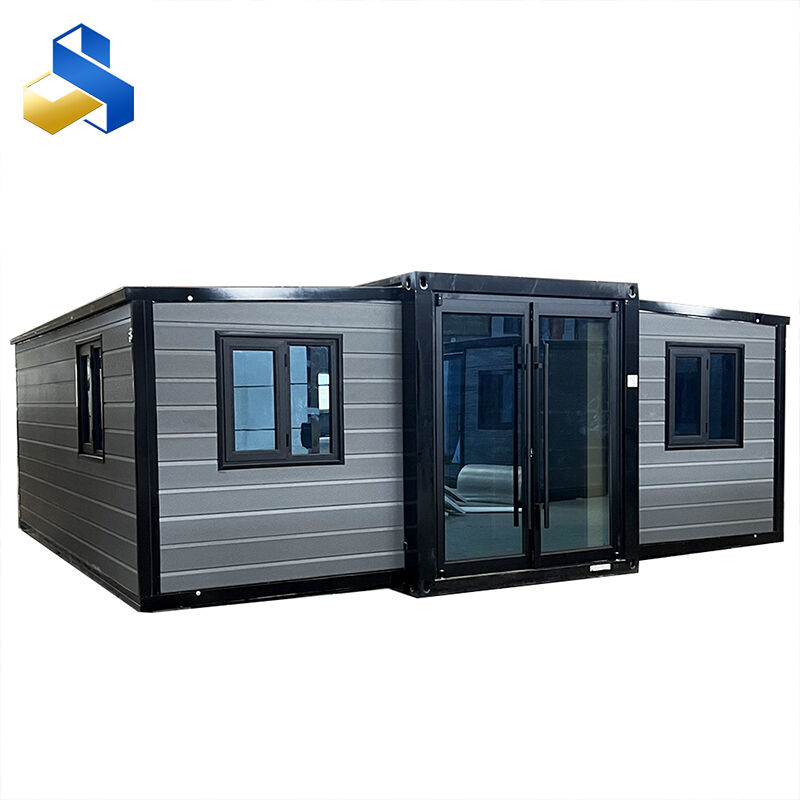
Standard Double-Wing Container House Expansion Time and Real-World Benchmarks
Baseline Expansion Duration: 15–20 Minutes Under Optimal Conditions
When everything goes right – flat terrain, ready power supply, and skilled workers on hand – these double wing container houses pop out in just 15 to 20 minutes flat. What makes this possible? Special hydraulics or electric motors work together to spread those wings at the same time. First they release the safety locks, then stretch out the frame, finally snapping all the connecting parts into place. Most of the wiring, pipes, and heating/cooling systems are already built in, so there's not much tinkering needed after expansion. But let's face it, nobody ever gets perfect setup conditions. If the ground isn't level or the site wasn't properly prepped, expect the whole thing to take maybe half again as long sometimes even longer depending on what kind of mess we're dealing with.
Field Data Validation: 92% of Deployments Complete Within ±3 Minutes of the 17.5-Minute Median
Looking at industry data shows pretty consistent results: around 92% of all installations wrap up within plus or minus 3 minutes of the average 17.5 minute setup time. Why so predictable? Well, most companies follow standard engineering practices these days, use actuators that are finely tuned for accuracy, and rely on solid locking systems that just work. When comparing different technologies, electro-mechanical setups tend to be more reliable with a margin of error around 2.1 minutes compared to hydraulics at about 2.8 minutes. The difference comes down to how sensitive hydraulic systems are to changes in fluid pressure. Most delays happen when things go wrong. If the ground isn't level beyond a 5 degree angle, installation takes an extra 4 to 7 minutes. Manual fixes like clearing away debris or adjusting latches can eat up even more time, sometimes adding six minutes or more to the process. These numbers stay pretty much the same whether we're talking about emergency response units deployed after disasters or equipment set up in remote locations for business operations.
Key Factors That Influence Double-Wing Container House Expansion Time
Site Conditions: Terrain, Power Access, and Ground Preparation
How ready a site is plays a big role in how long expansion takes. When dealing with sloped or bumpy ground, we need to stabilize things first through grading work, creating level pads, or installing adjustable footings. This extra step can push back setup times by around 25 to 40 percent compared to working on flat ground. For sites far from city power grids, bringing in generators becomes necessary along with checking fuel supplies, which typically adds about 10 to 15 minutes onto electrical connections. The type of ground underneath matters too. Field tests from the Modular Building Institute show compactable soils cut down expansion time by approximately 18% when compared against loose, rocky areas or wet ground conditions. Getting ahead of these issues makes all the difference. Proper grading, good drainage planning, and making sure power is sorted out well before equipment arrives helps keep mechanical systems running at their intended pace without unnecessary delays.
System Actuation Type: Hydraulic vs. Electro-Mechanical Speed and Reliability Trade-offs
The way we actuate things has a big impact on how well they deploy in practice. Hydraulic systems are great when dealing with heavy modules or tough conditions because they can generate lots of torque. But these systems take about 22 minutes to fully extend, which is roughly 20 to 30 percent slower compared to electro mechanical options. On the flip side, electro mechanical actuators usually get deployed within 15 to 17 minutes thanks to direct drive motors and gear trains. However, these tend to fail more often when temperatures drop below minus ten degrees Celsius or when there's a lot of dust around. Looking at reliability data from the National Institute of Building Sciences, it turns out hydraulic systems suffer about 40% fewer operational problems during wing deployments. That makes them a better choice for places like arctic regions, deserts, or areas with strong winds even though they aren't as fast as their electro mechanical counterparts.
The Expansion Process: From Stowed to Fully Operational Double-Wing Layout
Step-by-Step Deployment Sequence: Unlocking, Extending, Locking, and Integrating
The expansion workflow follows a precise, repeatable sequence:
- Unlocking: Primary latches and secondary restraints are released–typically completed in under 90 seconds by two technicians.
- Extending: Wings deploy simultaneously; hydraulic systems complete this phase in 3–5 minutes, while electro-mechanical units take 4–6 minutes due to incremental motor control.
- Locking: Integrated steel pins engage fully extended positions, verified via tactile feedback and visual indicators–completed in <2 minutes.
- Integrating: Pre-routed utility connections (power, data, water, HVAC) are joined and tested. This final step activates livable space functionality.
When terrain and power access meet specifications, 92% of units reach full mechanical readiness within ±3 minutes of the 17.5-minute median–validating the repeatability of factory-engineered deployment logic.
How Design Customization and System Integration Affect Effective Expansion Time
Beyond Mechanical Expansion: HVAC, Electrical, and Structural Hookup Add 10–30+ Minutes
While core mechanical expansion concludes in 15–20 minutes, achieving full operational readiness adds 10–30+ minutes–depending on system complexity and integration maturity. Critical variables include:
- HVAC configuration: Multi-zone systems with ducted returns require extensive field connections, whereas pre-balanced, ductless mini-split integrations reduce hookup time by up to 14 minutes.
- Electrical scope: Custom load centers, surge protection, or off-grid battery tie-ins demand circuit verification and commissioning–adding 8–12 minutes versus plug-and-play grid-tied setups.
- Structural adaptations: Seismic bracing, wind uplift anchors, or foundation tie-downs introduce field fabrication steps not part of standard expansion protocols.
- Integration maturity: Units with consolidated service chases, color-coded terminals, and factory-tested plug-and-play modules cut integration time by 30% compared to field-assembled alternatives.
Design optimization–such as standardized interface points, pre-terminated conduit runs, and modular utility cores–can trim the upper end of integration time by 12 minutes. Conversely, custom structural modifications consistently push total deployment beyond the mechanical expansion window, underscoring the importance of early coordination between architects, engineers, and manufacturers.
FAQ
What is the average expansion time for a double-wing container house?
Under optimal conditions, the expansion duration ranges from 15 to 20 minutes.
What factors can delay the expansion process?
Uneven terrain, insufficient ground preparation, remote site power access, and complex system integration can extend the expansion time.
Which actuation system is more reliable?
Hydraulic systems are generally more reliable, especially in tough conditions, though they are slower compared to electro-mechanical actuators.
How does site condition influence setup time?
Sites with uneven terrain or poor ground preparation require additional steps such as grading and stabilizing, which can increase setup time by 25 to 40 percent.
What contributes to additional time after mechanical expansion?
HVAC configuration, electrical scope, structural adaptations, and integration maturity can add an extra 10 to 30+ minutes.