
 EN
EN
Let's get real about building for a minute. It's not just about throwing up walls anymore; it's about creating a space that works intelligently. With energy costs bouncing all over the place and everyone trying to lower their environmental footprint, the stuff you choose to build with has never been more important. The modern building material you pick is the single biggest factor in whether your home or office is an energy-sucking nightmare or a cozy, cost-effective haven.
We spend a lot of time looking at how structures go up these days, especially the cool, modern stuff like prefab container houses and modular units. And what we see is a total shift in thinking. It's moved from basic construction to precision engineering. We're designing buildings as complete systems, where every component, from the frame to the final coat of paint, plays a part in keeping the internal temperature stable. Let's walk through how this works with some real-world examples that actually make a difference on-site.
Building an Advanced Thermal Envelope with Smart Wall Systems
Think of your building's exterior not as a single wall, but as a high-performance "thermal envelope." In the past, you might have relied on bulk alone. Now, it's about layered, engineered systems. Take wall panels, for example. At Gouyu, they work extensively with materials that turn a simple wall into a powerful barrier. Calcium silicate board is a fantastic base – it’s incredibly durable, handles moisture without breaking a sweat, and provides a perfect surface for finishing. But if you really want to talk about stopping heat transfer cold, you have to look at the technology inside their sandwich panels.
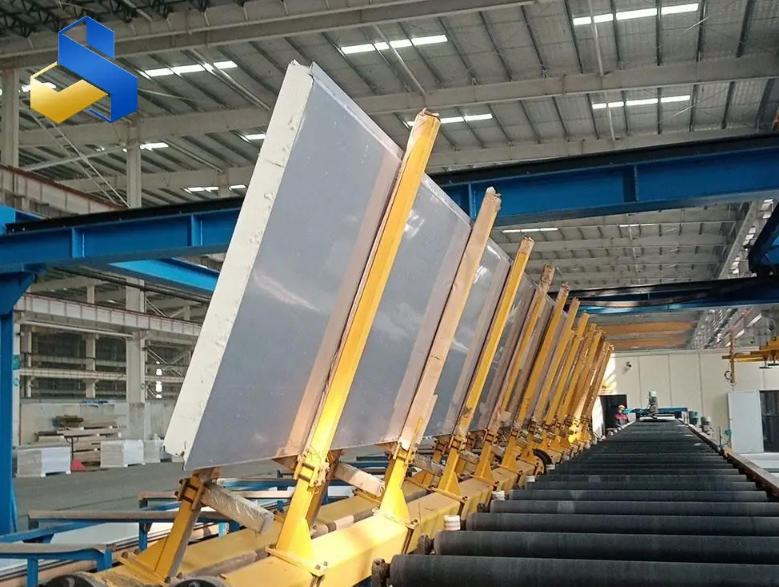
Picture a color-coated steel sheet, tough and weather-resistant, but the real magic is the core. That core can be glass wool, rock wool, or polyurethane foam. This isn't just filler; it's high-density insulation engineered right into the structure of the wall. So, when a crew installs a polyurethane sandwich panel, they aren't just building a wall; they're locking in an R-value (that's the measure of thermal resistance) that would take a foot of traditional material to match. It's a huge difference. You feel it the moment you walk inside on a hot day – no AC blasting, yet it's noticeably cooler. For specialized needs, like a cold storage unit, rock wool-filled panels are the gold standard. They are specifically designed to create an impenetrable thermal barrier, keeping the cold in and the heat out with minimal energy input. And the best part? With carved metal panels now available, you don't have to sacrifice style for this insane level of performance. You can have texture, depth, and a modern look, all while your building envelope is working at peak efficiency.
High-Performance Fenestration: Where Science Meets the View
Okay, you've invested in a super-insulated wall system. But every single window and door is a potential weak point, a place where all that carefully controlled air can leak out. This is where modern fenestration – the technical term for windows and doors – becomes absolutely critical. It's no longer just about glass and a frame; it's about thermal science.
Let's start with windows. Thermally insulated aluminum windows are a perfect example. Aluminum is strong, sleek, and low-maintenance, but it's a natural conductor. The breakthrough is the "thermal break" – a non-metallic spacer, usually made of reinforced polyamide, inserted between the interior and exterior parts of the frame. This breaks the bridge of conductivity. Pair that frame with double-glazed insulated tempered glass. We're talking two panes of glass, often with one coated in a low-emissivity (low-E) layer, and a sealed space in between filled with argon gas. This combination reflects heat back into the room in winter and keeps solar heat out in summer. It’s a massive upgrade. For a truly modern, airy feel, especially in commercial spaces or contemporary homes, you might see plastic-steel windows used in floor-to-ceiling glass curtain walls. This floods the interior with natural light, which has its own benefits for well-being and reduces the need for artificial lighting, all while maintaining that thermal performance.
Doors have undergone a similar revolution. A basic wooden door is a thermal sieve. Compare that to a security door with polyurethane foam filling. The foam isn't just for a solid feel and soundproofing; its closed-cell structure is a phenomenal insulator, creating a tight seal. For spaces needing flexibility and an extra layer of defense, aluminum alloy roller shutter doors are a smart choice. When closed, they add a significant thermal and security buffer. And for the main entry, a well-constructed steel swing door, properly sealed and with an insulated core, provides that solid, secure feeling and a tight seal against the elements, ensuring your expensive heating or cooling stays where it belongs.
Protective Coatings: The First Line of Defense That Lasts
It's easy to overlook paint, to see it as just a color choice. But modern latex paint is a sophisticated protective coating, especially critical for buildings like container homes that are exposed to the full force of the elements. Choosing the right paint is a vital step in protecting your entire investment.
Inside, you want something safe and healthy. Environmentally friendly acrylic latex paint is the go-to. It's low in volatile organic compounds (VOCs), so it doesn't off-gas harmful chemicals into your living space. It’s durable, breathable, and keeps your interior walls looking great. But the exterior is a battlefield. It needs armor. Weather-resistant latex paint is exactly that. Its formulation is engineered to handle the full spectrum of environmental stress: intense UV radiation that would fade lesser paints, driving rain and snow, and the constant cycle of expansion and contraction as temperatures swing from day to night. This flexibility is key; it prevents cracking and peeling, which is how water gets in and starts to do damage. For a container home, or any prefab structure, this shield is non-negotiable. It protects the structural materials underneath, preventing moisture intrusion and degradation, which is fundamental to the long-term durability and energy efficiency of the whole building.
The Takeaway: Building as an Integrated System
So, when you look at a modern, energy-efficient building today, you have to see it as a single, integrated system. It’s a symphony, not a bunch of soloists. The high-R-value building material in the walls is designed to work in perfect harmony with the thermal-break windows, which are sealed by the insulated doors, all protected by a high-performance, weather-resistant coating.
This systems-level thinking is what defines modern, smart construction. It's why prefab methods, when done right, can produce structures that are not only faster and more cost-effective to build but are also vastly superior in performance. By demanding more from every single component – from the core of a sandwich panel to the formulation of the exterior paint – we are creating buildings that are dramatically cheaper to operate, profoundly more comfortable to inhabit, and built to stand strong against the years. That’s why the choice of material matters so much. It’s the difference between just building a structure and creating a high-performance home for the future.