
 EN
EN
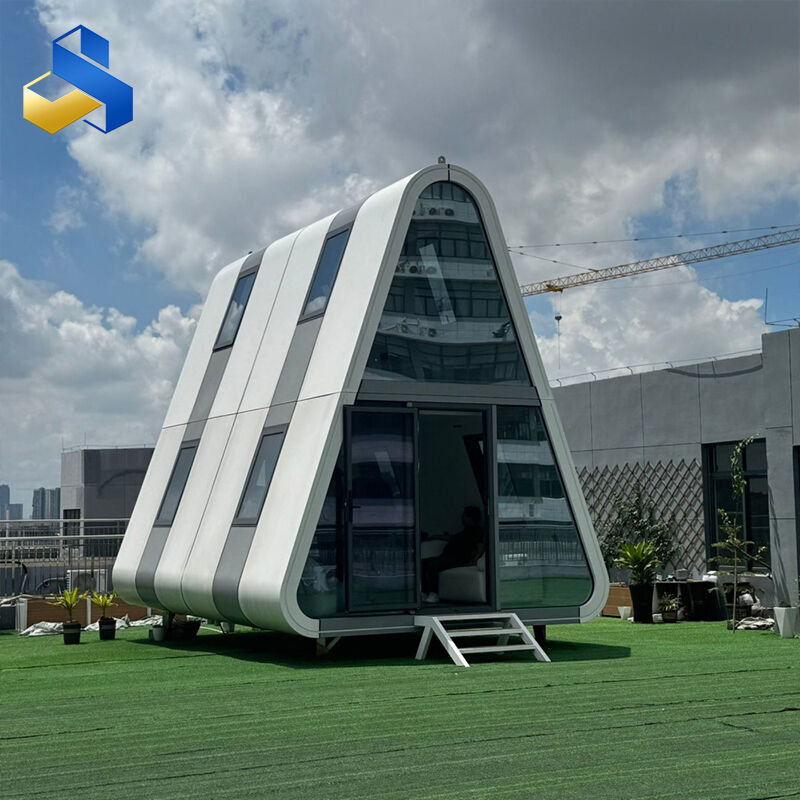
Zoned Functional Layouts for Cognitive Clarity and Movement Efficiency
Three-Zone Separation: Sleep, Sit, Store – Balancing Privacy and Flow
Designing effective space capsule houses really comes down to splitting up the small available space into three main areas: where people sleep, where they sit, and where things get stored. When these zones are separated out clearly, it helps the brain make sense of the space better because there's a designated spot for each activity, which cuts down on mental stress in tight quarters. For privacy, most designs put the sleeping area either above ground level or behind partial walls. The sitting area stays open so folks can see around, but still keeps enough distance from storage spaces to maintain some flow through the room. Clear plastic panels let sunlight pass through while marking off different sections visually. Some homes also use tiered platforms that suggest separation without actual walls getting in the way. Storage solutions often go vertical inside wall cavities or beneath seating areas, doubling as functional furniture while keeping walkways free. Every inch counts in these tiny homes, so good design makes sure everything serves at least two purposes and contributes to overall comfort despite the constraints.
Ergonomic Circulation Paths in Sub-20m² Space Capsule House Design
When working with really small spaces under 20 square meters, how people move around becomes super important for making the space actually usable. Good design needs at least 60 centimeters of space along main walking areas so folks don't feel trapped like they're walking through a narrow hallway. Spaces that form loops instead of straight lines work better because everyone ends up backtracking less than 40% of the time compared to when everything runs in straight lines. Bending corners help people see what's coming next and make getting around easier. Putting down non slip surfaces where different areas meet keeps accidents from happening, and leaving enough room under fold out furniture lets people move around without bumping their knees. Studies suggest that curved walking paths can make small rooms feel bigger, and adding little handles here and there gives extra support where needed. These smart design choices turn tight spaces into places where people can actually navigate comfortably and safely.
Integrated Service Core: Streamlining Plumbing, Power, and Maintenance
Centralized Core Design for Structural Integrity and Utility Efficiency
When mechanical, electrical, and plumbing (MEP) systems get grouped together in one reinforced service spine, efficiency really takes off in small living spaces. Putting all those water lines, electrical wires, and HVAC ducts inside a special structural wall can cut down on piping and wiring mess by around half compared to spreading everything out across the building. The way these systems integrate actually makes the whole structure stronger too, while saving money on materials and cutting down installation time. Think about a vertical core just 80 centimeters wide that holds greywater recycling systems, fresh water pipes, and easy access points for utilities. This setup lets technicians fix problems 30% quicker when needed, which matters a lot since every square meter counts in tiny homes under 20 square meters. Space capsule designs rely heavily on this kind of smart integration to maximize usable space without sacrificing functionality.
Future-Proof Electrical and Access Planning in Compact Space Capsule House Layouts
When designing electrical systems for tiny homes, planners need to think ahead about how technology will change over time. The modular approach works wonders for integrating things like solar inverters or battery storage solutions. Those clever access panels hidden behind furniture make replacing components much easier without messing up the living space. Smart home tech also cuts down on physical switches by around 70%, which is pretty impressive. According to the Compact Architecture Review from last year, these forward-thinking designs can save homeowners about $740,000 in renovation costs over a decade when compared to traditional retrofitting methods. Going with shallow depth panels and standard connectors makes future upgrades possible too. Want to add wireless charging spots or an AI controlled climate system? No problem. These small but smart design choices keep making tiny homes adaptable and ready for whatever comes next in home technology.
Vertical Space Optimization and Multi-Functional Built-In Storage
Lofted Zones and Vertical Layering to Expand Usable Volume
Getting the vertical space right matters a lot when designing tiny homes below 20 square meters. Putting the sleeping area up high through lofts frees up around 30 to 40 percent of the floor space for other stuff during the day, something many people who live in small spaces have found works well. The layout usually follows three basic layers: top level for sleeping, middle section for moving around, and bottom area for storing things. When building these spaces, safety comes first. Some folks install heavy duty ladders with extra storage spots on the rungs, while others go for spiral stairs that also hold books or decor items. Most experts recommend keeping at least 1.2 meters of headroom above the loft bed so someone can sit comfortably without bumping their head. Placing these raised areas close to the house's main support structures helps everything stay stable without making the space look cluttered or awkward.
Foldable, Convertible, and Embedded Furniture Systems for Adaptive Space Capsule House Design
Furniture that transforms spaces is becoming essential when designing compact homes where one room must handle multiple functions. Think Murphy beds combined with fold down workstations, dining tables mounted on walls that tuck away when not needed, kitchen counters that slide out to reveal storage compartments for appliances, and even drawers built into staircases to maximize tiny spaces. All these clever additions help keep things looking tidy while allowing rooms to switch purposes quickly. Studies suggest that around 8 out of 10 people living in small apartments report better moods after making such changes. When selecting materials, go for heavy duty hinges designed to last through thousands of openings and closings, plus fasteners that make repairs easier rather than harder. Good construction matters because these pieces need to stand up to constant rearranging over many years of changing needs.
FAQs
How does a three-zone layout help in small spaces?
The three-zone layout—split into sleep, sit, and storage areas—helps define space for different activities, reducing mental stress by providing designated areas in tight quarters.
What are ergonomic circulation paths in small home design?
These are design strategies that ensure at least 60 cm of space for movement, use looping paths to reduce backtracking, and employ non-slip surfaces to improve safety.
What is an integrated service core?
An integrated service core combines mechanical, electrical, and plumbing systems into a single reinforced structure, making small living spaces more efficient and structurally sound.
Why is future-proof planning important for space capsule house layouts?
Future-proof planning ensures that as technology changes, the home can adapt easily, reducing long-term renovation costs and allowing for updates like solar power or AI systems.
How does vertical space optimization work?
Vertical space optimization involves using lofts to free up floor area, arranging spaces in layers, and ensuring safety and stability around elevated zones in small homes.