
 EN
EN
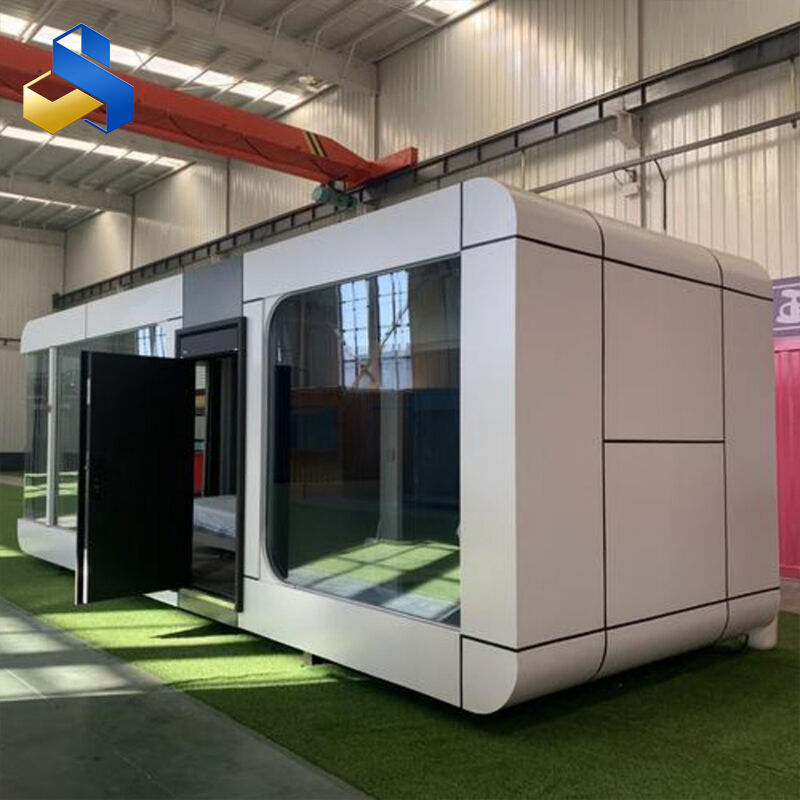
Core Insurance Requirements for Prefab Container House Manufacturers
Manufacturers who build prefabricated container homes run into specific problems during different stages of their work - when making the containers, shipping them around, and putting everything together on site. These are risks that regular business insurance just doesn't cover properly most of the time. There are basically three main types of insurance coverage that really matter here. First comes Builders Risk insurance, then there's Product Liability protection, and finally Errors & Omissions coverage (often called E&O). When these three types of insurance work together, they fill those big holes in standard policy coverage. This combination helps create a solid financial safety net for companies operating in the prefab housing market, something that makes good business sense given all the unique challenges involved in this industry.
Builders Risk Insurance: Covering Off-Site Fabrication and Transport Risks
Builders Risk insurance guards all sorts of physical stuff during manufacturing—from raw materials sitting around waiting to be used, through partially built modules on the production floor, right up to those finished units ready for shipping. Regular property insurance just doesn't cut it here because Builders Risk actually covers things that aren't yet installed when they get damaged. Think about collisions, bad weather ruining components, fires breaking out, or even simple mishandling errors. Why does this matter? Well according to FM Global research from last year, nearly half (that's 42%) of all supply chain losses in modular building come down to problems happening while transporting materials. Imagine this scenario: someone stacks several heavy modules together at a staging area and then tries loading them onto a truck with a forklift. If those modules suddenly tip over and crash into each other, regular insurance won't help much. But Builders Risk steps in precisely at these moments, covering the cost to fix or replace what got damaged where other types of coverage simply walk away.
Product Liability Insurance: Addressing Defects, Failures, and Third-Party Injury Claims
Product liability insurance kicks in when there are problems with how something was designed, made, or put together that lead to injuries or damage to property after it's been delivered and installed. The coverage handles legal costs, settlements, and court decisions for both quick failures and those hidden issues that show up much later down the road. Think about poor welding work that eventually causes balconies to fall apart years after construction. This is different from regular liability insurance that deals mainly with day-to-day accidents at work sites. The focus here is squarely on the product itself. Recent data shows a worrying trend: claims have gone up by 35% in the modular housing sector according to last year's Construction Defect Journal. Because of this spike, many insurers now want at least $5 million in coverage limits and insist policies match up with state warranty laws, which usually last around ten years after a project finishes.
Errors & Omissions (E&O) Insurance: Protecting Against Design, Engineering, and Specification Errors
Errors and Omissions (E&O) insurance handles money losses caused when professionals mess up their work without causing actual physical damage. Think things like wrong CAD drawings, messed up calculations for structural loads, or HVAC ducts that clash so badly they need complete module rework. One small mistake can lead to hundreds of thousands in extra engineering work and delays. What makes E&O different is that it covers purely financial problems too: projects running late, budgets blowing out, or getting hit with contract penalties because of design flaws nobody caught early on. These days most big contractors and property developers want proof of proper E&O coverage before signing off on any design-build agreement. For many companies, this isn't just good business sense anymore it's actually written into the contract requirements themselves.
Phase-Specific Coverage Gaps in Manufacturing, Transit, and Installation
Prefab container house manufacturers encounter acute coverage shortfalls at each stage of the build cycle—gaps that standard policies rarely bridge without tailored endorsements.
During manufacturing, standard property insurance often excludes work-in-progress stored off-site or custom-fabricated components awaiting shipment. That leaves high-value modules vulnerable during extended staging or quality assurance cycles.
In transit, marine cargo and inland marine policies frequently impose restrictive caps, exclude oversized loads, or deny claims tied to securement methods unique to containerized modules—especially when “all-risk” triggers fail to activate during highway transport.
At installation, general liability policies routinely exclude coverage for crane-related structural damage, weather exposure to partially assembled units, injuries from connection failures, or defective assembly work. A 2023 Ponemon Institute study found 63% of construction manufacturers lacked adequate installation-phase coverage—with average uncovered losses exceeding $740k per incident.
Proactive identification and endorsement-driven mitigation of these phase-specific gaps are non-negotiable for comprehensive insurance for prefab container house manufacturers.
Contractual Risk Transfer: Additional Insured Status and Indemnity Clauses
Contractual risk transfer strengthens the insurance program by shifting exposure to parties best positioned to control or insure it—turning agreements into enforceable risk management tools.
Enforcing Additional Insured Requirements with General Contractors and Developers
Getting additional insured status on those upstream partner liability policies isn't just good practice, it's basically table stakes these days. Before moving equipment onto a job site, manufacturers need actual written proof that they've been endorsed properly. And ideally, that endorsement should include primary and non-contributory language to avoid headaches later. The reason? When something goes wrong during their work, the manufacturer wants direct coverage from the contractor or developer's insurance policy. Industry numbers show that more than half of all construction defect claims stem from simple policy compliance issues. That's why smart companies run regular checks on those insurance certificates. Some even build automatic suspension clauses into their master agreements when there are gaps in coverage. These aren't just paperwork requirements; they're real protection against financial disaster down the road.
Drafting Enforceable Indemnity Provisions to Align with Insurance Limits
When drafting indemnity clauses, they really need to line up with what's actually covered by insurance policies. The details matter a lot - things like what's included, what's excluded, and how much money is at stake should all align exactly. Those broad "hold harmless" statements just don't work in court anymore because insurers won't back them up. Better to get specific about who has to defend against claims and make sure those obligations are clearly connected to actual insurance coverage that can be proven. Also important to exclude cases where someone was super negligent since that helps keep these agreements enforceable across different states. Indemnitors should show they have the financial muscle behind their promises too. This means getting third parties to verify their claims and making sure there are real policy numbers and certificate documents on file somewhere. Getting this right isn't just good practice; it meets the ever-changing demands from insurance companies working with container home manufacturers and stands up when underwriters take a close look.
Certifications and Compliance as Insurance Enablers
How ISO 9001, AWS D1.3, and ICC-ES Evaluation Reports Strengthen Underwriting Position
Certifications go way beyond being mere marketing gimmicks. They actually serve as real risk management tools that have a direct impact on how insurers evaluate projects. Take ISO 9001 for instance, which shows companies maintain strict quality standards. Then there's AWS D1.3 that proves welders know their stuff when working with cold formed steel structures. And let's not forget ICC-ES reports that basically say "this container assembly meets building codes." When all these certifications are in place together, studies show defect rates drop significantly. Structural failures? Those decrease too, cutting down Builder Risk and Product Liability claims by around 40% according to industry safety data. Insurance companies definitely notice this kind of diligence. Most will offer premium discounts between 15% and 25%, plus better coverage options. For container home builders specifically, having these papers on file makes meeting insurance company requirements much easier. It also gives them stronger bargaining power when trying to get commercial insurance for prefabricated homes, particularly since many insurers now require proof of quality control before writing policies.
FAQ
What types of insurance are essential for prefab container house manufacturers?
Essential insurance types include Builders Risk insurance, Product Liability insurance, and Errors & Omissions (E&O) insurance. These help cover various risks involved in manufacturing, transit, and installation stages.
Why is Builders Risk insurance important?
Builders Risk insurance covers physical items during manufacturing, transport, and assembly stages. It is crucial because it provides protection against damage to components that are not yet installed or completed.
What does Product Liability insurance cover?
Product Liability insurance protects against claims related to defects or issues in the product design, manufacturing, or assembly that lead to property damage or personal injuries after the product is delivered.
How does Errors & Omissions insurance help manufacturers?
Errors & Omissions insurance covers financial losses due to professional mistakes, such as design errors or project delays, which can cause significant economic impacts.
What are phase-specific coverage gaps?
Phase-specific coverage gaps refer to vulnerabilities that occur at different stages of manufacturing, transit, and installation where typical insurance policies may not fully cover risks without additional endorsements.
How do certifications like ISO 9001 benefit manufacturers?
Certifications like ISO 9001 help manufacturers by demonstrating compliance with high-quality standards, which can lead to reduced risk, better underwriting positions, and potentially lower insurance premiums.
Table of Contents
- Core Insurance Requirements for Prefab Container House Manufacturers
- Phase-Specific Coverage Gaps in Manufacturing, Transit, and Installation
- Contractual Risk Transfer: Additional Insured Status and Indemnity Clauses
- Certifications and Compliance as Insurance Enablers
-
FAQ
- What types of insurance are essential for prefab container house manufacturers?
- Why is Builders Risk insurance important?
- What does Product Liability insurance cover?
- How does Errors & Omissions insurance help manufacturers?
- What are phase-specific coverage gaps?
- How do certifications like ISO 9001 benefit manufacturers?