
 EN
EN
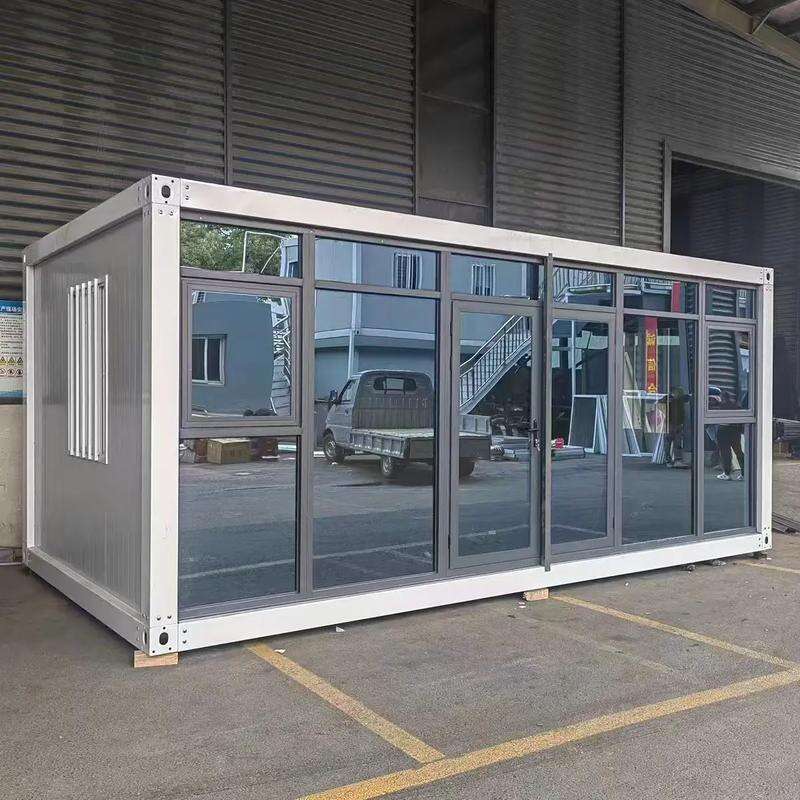
Understanding Oversize Load Regulations for Container House Transport Permits
How DOT Defines Oversize and Overweight: Thresholds That Trigger Permit Requirements
Federal regulations establish clear size and weight thresholds that determine when container house transport permits become mandatory. The U.S. Department of Transportation (DOT) defines loads exceeding these baselines as oversize or overweight:
| Dimension | Federal Threshold | Permit Trigger |
|---|---|---|
| Width | 8.5 feet (102 inches) | 102 inches |
| Height | 13.5 feet (162 inches) | 162 inches |
| Weight | 80,000 lbs GVWR | Gross limit or 12,000 lbs per single axle |
The standards act as national guidelines, though actual enforcement falls to individual states which frequently set their own rules that are even tougher than federal ones. When any single measurement goes beyond what's allowed, getting permits becomes necessary. Take for instance when someone mounts an untouched shipping container onto a regular flatbed truck bed. The deck usually sits around four feet high already, so stacking containers this way typically brings the whole thing right up to 13.5 feet tall exactly at the federal limit. Something as small as having an air conditioning unit sticking out from the roof can send measurements past those limits. Getting familiar with these numbers before starting a journey helps prevent unnecessary fines down the road. Many transport companies learn this lesson the hard way after running into unexpected roadblocks because they didn't check dimensions properly beforehand.
Why a Standard 40-Foot Container House Often Qualifies as Oversize—Even Without Modifications
A standard 40-foot shipping container measures 8 feet wide and 8.5–9.5 feet high—dimensions that appear compliant with federal width and height thresholds. Yet, three practical realities routinely classify it as oversize:
- State Width Limits: More than 30 states enforce maximum widths of 8 feet or less—automatically requiring permits for standard containers.
- Transport Stack-Up: Trailer deck height adds ~4 feet to container height; high-cube units (9.5 ft) exceed 13.5 feet when loaded—meeting or surpassing the federal height trigger.
- Weight Distribution: Furnished or insulated units commonly weigh 25,000–35,000 lbs. Combined with trailer and tractor weights, they frequently violate axle-specific limits—even if under 80,000 lbs gross.
Because state-level restrictions override federal baselines, container house transport permits remain essential regardless of nominal container dimensions. Preemptive verification against destination-state rules prevents costly delays and roadside stops.
State-by-State Variations in Container House Transport Permits
Key Differences in Width, Height, and Escort Requirements Across Major States
The rules for oversized loads are all over the map from one state to another, which makes trying to follow them consistently across regions basically impossible without doing serious local research first. Take width limits as an example: Texas gives truckers a pretty generous 16 feet without needing any extra help, but head west to California and suddenly there's a strict 14-foot limit where pilot cars become mandatory. Height restrictions tell a similar story. Florida lets things go up to 14 feet on most roads, while many Northeast states get picky about anything taller than 13'6", often forcing special routes or even approved alternate paths. The escort requirements just make things worse. Colorado will let someone drive alone if the load stays under 12 feet wide, but Michigan wants a full entourage including both front and back guides for anything wider than 10 feet. Because of these inconsistencies, a regular 40-foot container home needs permits in about eight out of ten states just because of its width. And don't forget about axle weights, either. Montana sticks with the national standard of 80,000 pounds total weight, but Oregon brings that down to 75,000 for moving modular homes, so planners need to carefully redistribute cargo weights before even applying for permission.
Case Study: Permitted Routes and Restrictions in Texas, California, and Florida
Oversize load authorization reveals how regional infrastructure and policy shape operational feasibility:
- Texas: Daytime-only movement on I-35; night bans apply near Austin, Dallas, and San Antonio due to urban congestion and limited emergency response access.
- California: Coastal routes (e.g., CA-1, I-5 south of Monterey) require seismic stability documentation verifying structural integrity during transport—especially for homes with rooftop additions.
- Florida: Height-restricted bridges in the Florida Keys prohibit container passage entirely; barge transport is the only approved method for deliveries to Key West and Marathon.
Across all three states, container house transport permits average 30% longer approval timelines than standard prefab home permits—particularly when crossing municipal boundaries where local road commissions impose additional review layers.
Transport vs. Occupancy: Why Moving a Container House Requires Different Permits Than Building It
Getting a Certificate of Occupancy basically means proving that the container house is safe enough for people to live in. This involves getting all those building permits first to check if the structure complies with codes, followed by inspections looking at everything from wiring to pipes and fire protection systems. On the flip side, permits needed when moving these houses around deal with completely different issues under oversize load rules. Think about things like making sure there's enough space under bridges, checking weight distribution across axles, maintaining stability while driving, and avoiding problems on specific roads where turns might be too tight or bridges too low. The occupancy permit tells everyone this place can actually be lived in safely. Transport permits are about keeping others safe while the house is being moved somewhere else. Most states require these because hauling a 40-foot container on a flatbed truck goes way beyond what normal trailers handle. That usually means special certification for the equipment used, detailed surveys of the planned route, and sometimes even having another vehicle ahead warning traffic. Mix these up and big problems follow fast. One permit deals with where the house sits after it gets there. The other handles how it gets there in the first place. People who treat them as the same thing end up wasting time, getting hit with penalties, and watching their applications get tossed back repeatedly.
The Container House Transport Permit Application Process: From Route Planning to Approval
Essential Steps: Route Survey, Carrier Coordination, and Documentation Submission
Obtaining container house transport permits demands disciplined execution across three interdependent phases:
- Route Survey: Use GPS-enabled mapping tools (e.g., Rand McNally Truckers Atlas or state DOT GIS portals) to verify vertical and horizontal clearances, bridge weight ratings, lane restrictions, and utility line heights along every mile of planned travel.
- Carrier Coordination: Partner with carriers licensed for oversize transport who provide certified equipment, trained drivers, and escort services aligned with state requirements.
-
Documentation Submission: Compile and submit:
- Engineer-signed weight distribution charts showing actual axle-by-axle loading
- State-specific insurance certificates confirming minimum $1M liability coverage with explicit endorsement for prefabricated structure transport
- Axle configuration diagrams matching the proposed rig setup
- Turn-by-turn transport plans including rest stops, fuel locations, and contingency routes
Missing even one element risks rejection—state DOTs process over 11,000 oversize applications quarterly, and incomplete submissions are among the top reasons for delay.
Common Delays and How to Avoid Them (e.g., Missing Axle Configurations or Inadequate Insurance Proof)
Nearly 40% of applications face avoidable delays averaging 3–8 weeks. Most stem from technical omissions—not policy errors—including incorrect axle weight distributions, unsigned engineering documents, or generic insurance forms lacking modular transport language. To prevent setbacks:
- Engage a permit service that cross-checks submissions against current state DOT databases and bulletin updates
- Submit NOTARIZED axle configuration sheets reflecting actual load positioning—not theoretical setups
- Ensure insurance certificates include explicit endorsements for “prefabricated residential structure transport”
Applications with validated technical specifications and executed carrier contracts typically receive approval in 7–10 business days—compared to 30+ days for deficient filings.
FAQ Section:
What is considered an oversized load for container houses?
An oversized load for container houses is any load that exceeds federal thresholds of 8.5 feet in width, 13.5 feet in height, or 80,000 lbs in gross vehicle weight rating (GVWR).
Why do container houses require transport permits?
Container houses require transport permits when their dimensions exceed federal or state-imposed limits, necessitating regulatory measures to ensure safe and lawful transportation.
What are the essential steps for obtaining a container house transport permit?
The essential steps for obtaining a container house transport permit include conducting a route survey, coordinating with licensed carriers, and submitting necessary documentation.
How do state regulations differ for container house transport?
State regulations for container house transport differ in terms of width, height, and escort requirements, making it essential to research and comply with specific state laws before transport.
Table of Contents
- Understanding Oversize Load Regulations for Container House Transport Permits
- State-by-State Variations in Container House Transport Permits
- Transport vs. Occupancy: Why Moving a Container House Requires Different Permits Than Building It
- The Container House Transport Permit Application Process: From Route Planning to Approval
- FAQ Section: