
 EN
EN
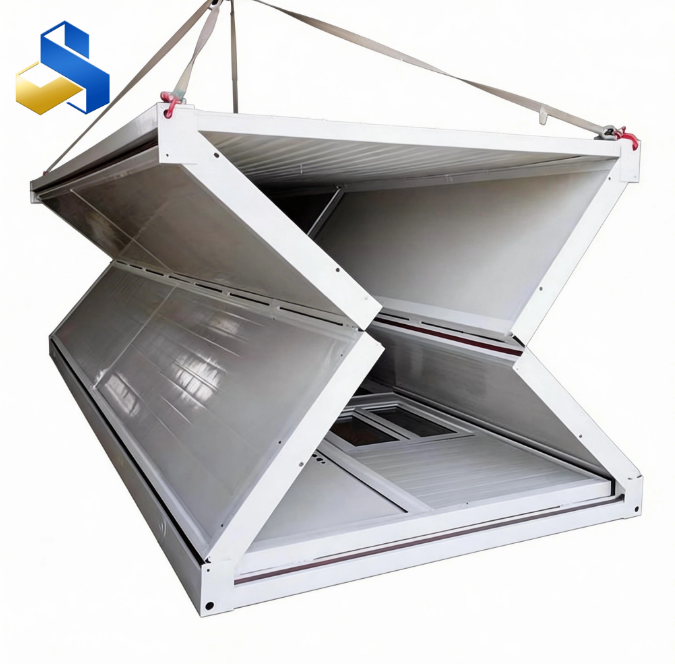
The Core Engineering Behind Folding Container Houses
A folding container house begins as a compact, flat-packed steel module that expands into a fully enclosed living or working unit in a matter of hours. The frame relies on cold-rolled steel profiles and a hinge system tested to thousands of open-close cycles without deformation. Wall panels often use sandwich construction, typically mineral wool or polyurethane foam bonded between galvanized steel sheets, which keeps the weight low while delivering solid thermal insulation. The roof slopes just enough to shed rain, and the joints are designed to channel water away from the interior, a detail that becomes critical when a relief camp faces monsoon downpours. Because the entire module hinges rather than disassembles, the structural continuity reduces leak points and boosts overall rigidity. On a seismic test bench, properly anchored folding units have handled magnitudes that would crack a conventional brick-and-mortar shelter, which speaks to why field engineers keep recommending them for unpredictable environments.
Speed of Deployment When Every Minute Counts
After a disaster, the first 72 hours are chaotic. A folding container house can shift from a shipping configuration to a lockable, weatherproof room in under three minutes with a team of two, using only a basic winch or hydraulic assist. Traditional tents often require multiple people to stake, tie, and secure, and they still leave occupants exposed to wind shear and flooding. With folding units, the floor is already part of the module, so there is no need to wait for a concrete pad. Compacted gravel or even leveled earth works. That alone can shave half a day off a typical shelter build in a muddy staging area. Field coordinators value the simple sequence: drop the unit, unfold, lock the corner posts, and connect utility ports. One senior logistics officer compared it to setting up a professional mobile kitchen unit, except faster and without needing a crane for the final steps.
Logistics and Transport: A Game-Changer for Relief Supply Chains
Moving bulk shelter materials into a conflict zone or an island hit by a cyclone is expensive and slow. A standard flatbed truck can carry up to ten folding container houses when they are collapsed, whereas the same truck might carry only two or three conventional prefab modules of equivalent floor area. That difference directly affects the number of flights, ship charters, or truck convoys needed.
A humanitarian logistics simulation for a 100-unit deployment in Southeast Asia shows the practical differences in transport and setup. A standard 40-foot flatbed truck can carry ten folding container houses when they are collapsed, compared with only three standard flat-pack prefab modules of equivalent floor area; heavy-duty relief tents are far more compact at roughly fifty folded units per truck. Once on site, two workers can unfold and lock a folding container house in five to eight minutes, while a standard flat-pack prefab requires four workers and forty-five to sixty minutes, and a heavy-duty relief tent takes four workers about twenty to thirty minutes to pitch. The folding container house and the relief tent both eliminate the need for heavy lift equipment, whereas the standard flat-pack prefab depends on a crane. Thermal performance also differs sharply: the folding unit achieves an average insulation value of R-4.5, the flat-pack prefab reaches R-3.2, and the relief tent provides only R-1.8. In terms of service life, a folding container house is expected to remain serviceable for fifteen years or more, a standard flat-pack prefab for at least ten years, and a heavy-duty relief tent for two to three years.
The numbers highlight why folding container houses often end up being classified as reusable assets rather than consumable relief items. After one deployment, they can be folded down and shipped to the next hotspot without losing structural integrity.
Durability Under Pressure: Real-World Stress Tests
Steel frames bring obvious advantages in a setting where shelters might face flying debris or accidental vehicle impact. But what separates a well-engineered folding container house from a basic steel box is how it handles repetitive folding over multiple rotations. Testing protocols derived from ISO 1496-1 container standards push these modules through cyclic loading, twist-lock compatibility checks, and racking tests. A unit that passes those assessments can be lifted from the top corners by a standard container spreader without warping. That makes it compatible with port infrastructure worldwide. In cold storage depots, some agencies have stored folded units at minus 30 degrees Celsius for weeks, then unfolded them, and found the seals and gaskets still functional. The coating technology also plays a big role: a two-component epoxy zinc-rich primer with a polyurethane topcoat can survive salt spray tests for over 1,000 hours, making the units viable for coastal and island deployments.
A Case from the Field: Rapid Clinic in a Flood Zone
When heavy flooding cut off road access to a river basin in South Asia in early 2024, a small humanitarian team needed to set up a vaccination post on a strip of high ground. Roads were underwater, so everything had to arrive by helicopter sling load. The team deployed two folding container houses, collapsed to a height of just 45 centimeters each. They were underslung beneath a medium-lift helicopter and placed directly onto timber sleepers. Within an hour of landing, the first unit was unfolded and serving as a triage area. The second became a cold-chain storage room powered by a portable solar generator. The entire clinic handled over 300 patients in the first two days. One thing the field report noted was that the factory-fitted electrical conduits and pre-punched utility entries saved enough wiring time that a volunteer electrician finished the entire setup before sunset. That kind of plug-and-play readiness shifts the focus from construction to medical care, which is the entire point of an emergency response.
Recognizing the Limits and Smart Applications
No single shelter type works for every disaster scenario. A folding container house is heavier than a tent, so if the only access is a narrow foot trail, a soft shelter still makes more sense. The modules also require fairly level ground, a slope beyond five degrees can make unfolding tricky and may strain the hinges. On the other hand, for organized camps, mobile clinics, field offices, or short-term school buildings, the folding concept delivers a combination of security, climate control, and reusability that fabric solutions cannot match. Relief agencies increasingly classify these houses as semi-permanent infrastructure, which changes how they budget and plan for recurrent disasters. Instead of buying tents every season, they can pre-position folding units in regional warehouses, ready for rapid dispatch. The long-term cost curve often tips in favor of steel over textile after two or three cycles.
Suppliers with integrated manufacturing capability, such as Gouyu, contribute to that shift by keeping tight control over hinge tolerances and panel bonding, ensuring that every folding container house that leaves the factory can withstand the rigors of repeated global deployment without performance drift.
Table of Contents
- The Core Engineering Behind Folding Container Houses
- Speed of Deployment When Every Minute Counts
- Logistics and Transport: A Game-Changer for Relief Supply Chains
- Durability Under Pressure: Real-World Stress Tests
- A Case from the Field: Rapid Clinic in a Flood Zone
- Recognizing the Limits and Smart Applications