
 EN
EN
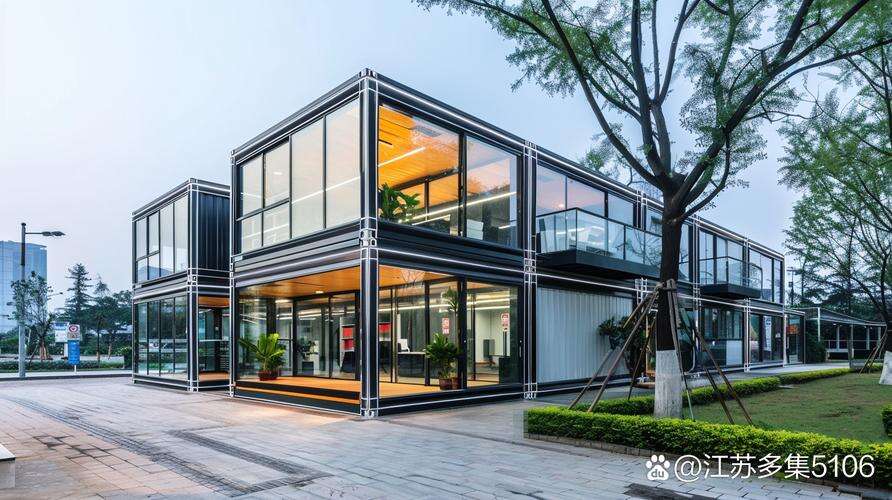
How Expansion Mechanisms Directly Influence Expandable Container House Durability
Fatigue Cracking at Expansion Joints Under Repeated Deployment Cycles
Expansion joints in container houses tend to suffer from metal fatigue, which limits how long these structures last before needing repairs. Every time the containers are moved or adjusted, the welds between them face repeated stresses that often go over 65 MPa. This level of force is way beyond what most materials can handle before tiny cracks start forming according to ASTM E8 tests. When those cracks appear, they spread quickly through the areas affected by heat during welding, particularly noticeable at the points where different modules connect. Real world experience indicates that structural problems typically show up after around 50 to 100 deployments under normal conditions. Things get even worse near coastlines where salt in the air speeds up failures by about 37%. To fight this issue, manufacturers need to use stronger steel like ASTM A572 Grade 50, employ advanced welding techniques such as robotics or lasers that create fewer stress points, and apply heat treatments after welding completes. These combined approaches have been proven to double the lifespan of joints, getting past 200 verified cycles before major issues arise.
Load Redistribution During Extension/Retraction and Its Effect on Frame Stress Distribution
Dynamic load redistribution during movement creates non-uniform stress patterns that challenge frame resilience. As modules slide, gravitational and inertial forces shift laterally—concentrating up to three times baseline pressure on guide rails and corner castings. This uneven loading risks permanent deformation in two critical operational states:
- Overextension, which strains anchor points and causes plastic deformation in 19% of observed cases (Modular Building Institute, 2023);
- Partial retraction, where misaligned sections induce torsional forces that bend support beams by 5–12 mm.
| Stress State | Critical Pressure Zones | Deformation Risk |
|---|---|---|
| Static (Deployed) | Foundation anchors | Low |
| Dynamic (Expanding) | Slide rails + corner blocks | High |
| Semi-Retracted | Interlocking mechanisms | Severe |
Finite element analysis confirms that synchronized, hydraulically controlled actuation reduces peak stress by 41% compared to mechanical or unsynchronized systems—underscoring that motion precision is foundational to long-term structural integrity.
Critical Engineering Elements That Sustain Durability in Moving Systems
Joint, Weld, and Seal Integrity: ASTM E283-22 Testing and Real-World Performance Correlation
The durability of moving parts really comes down to how they perform in practice, not just what specs say on paper. Take ASTM E283-22 air infiltration tests for example. When these tests are run at around 5.0 Pa pressure difference, they actually predict how well products will hold up against real weather conditions. Products passing this test tend to fail about 37% less often in the field when it comes to moisture and wind issues. Weld quality matters too. Automated laser welding makes a big difference compared to hand welding methods. Components made with lasers show about half (52%) fewer tiny fractures that can lead to bigger problems later. This means parts last longer at those stress points where failure would be most damaging. The connection between what happens in controlled lab settings and actual field performance shows why sticking to proper testing standards isn't just bureaucratic red tape but something that genuinely extends the life of sliding mechanisms in real world applications.
Dual-Seal Redundancy (EPDM + Silicone-Injected Channel) for High-Cycle Environments
Having redundant sealing really matters when we talk about reliability over many cycles. The main EPDM gaskets provide good UV resistance and bounce back after being compressed, while those secondary silicone channels injected into the system act as moving barriers against water when parts extend and retract. Tests accelerated through aging have found that this two part system cuts down on moisture getting in by almost 90% even in harsh coastal areas where corrosion is a big problem. What makes it work so well is how the silicone channel adjusts itself automatically, keeping the seal tight for over 500 operations. That's way better than what most single seal options manage, which typically last around 150 to 200 cycles before failing. For sliding container homes specifically, this kind of backup system addresses exactly what breaks down most often these days - joints slowly wearing out because they lose their compression strength over time and let outside elements sneak in.
Operational Maintenance Demands and Their Impact on Long-Term Expandable Container House Durability
Lubrication Degradation, Rail Wear, and Environmental Accelerants (Humidity, Dust, UV)
The long term durability really depends on handling those three main stress points that work together: when lubricants break down, rail surfaces start wearing out, and environmental damage happens. We've seen from field tests that after about 50 deployments, bad lubrication can boost friction levels by more than 40 percent. That leads to faster metal contact wear and eventually causes joints to shift out of place by over 5 millimeters. And this kind of misalignment is what actually starts those cracks forming from metal fatigue. The environment makes things worse too. For instance, equipment near coasts corrodes three times faster than similar gear in dry areas. Dust floating around increases wear by somewhere between 15% and 30%. Plus, sunlight breaks down both synthetic lubricants and those EPDM seals so badly that they need replacing every six months in places with intense sun exposure. Regular maintenance matters a lot here. Applying lithium complex grease every three months, checking rails twice a year for proper alignment, and reinforcing silicone channels at scheduled intervals cuts down overall wear and tear by anywhere from 60% to 80%. Following these steps keeps everything structurally sound for many years of operation.
Manufacturer Quality Assurance: Bridging Certification Gaps to Ensure Real-World Durability
ISO 9001:2015 certifications do show companies have good quality control systems in place, but these certs alone can't really tell us how well something holds up when things get tough in actual operation. Smart manufacturers bridge this knowledge gap by doing extra testing beyond what's required. They run accelerated cycle tests for at least 300 deployments, subject components to salt spray according to ASTM B117 standards, and simulate full system loads while considering both heat and wind forces. Independent testing has found that all this extra work cuts down defects by around 30 to maybe even 50 percent in key spots like sliding parts, connecting points between modules, and seals that need to last through many cycles. This matters because many competitors who only rely on their ISO certification and process audits end up with problems later on. The Construction Standards Report from 2023 backs this up. When it comes to expandable container housing, putting in the effort to test thoroughly means structures stay strong not just in theory, but actually hold up year after year in the field where it counts.
Frequently Asked Questions
What causes fatigue cracking in expandable container houses?
Fatigue cracking is primarily caused by repeated stress on the expansion joints, which exceeds 65 MPa, leading to the formation of tiny cracks. These cracks can quickly spread due to metal fatigue, especially in areas affected by heat during welding.
How does load redistribution affect expandable container houses?
Load redistribution during movement can create uneven stress patterns. This can lead to permanent deformation, particularly during overextension and partial retraction of the modules, affecting the overall durability and structural integrity.
What are the benefits of using dual-seal redundancy in expandable container houses?
Dual-seal redundancy, using EPDM and silicone-injected channels, significantly reduces moisture intrusion and enhances the cyclic life of the seals. It ensures a tight seal even in harsh environmental conditions, extending the life span of the joints significantly.
How does regular maintenance impact the durability of expandable container houses?
Regular maintenance, including lubrication, rail alignment checks, and seal reinforcement, is crucial for minimizing wear and tear. This proactive approach can reduce degradation by 60% to 80%, ultimately extending the structure's life.
Why is extra testing beyond standard certifications important?
Extra testing ensures that expandable container houses are not just durable in theory but also in practical, real-world applications. It helps identify potential defects early, improving overall reliability and performance in operational environments.
Table of Contents
- How Expansion Mechanisms Directly Influence Expandable Container House Durability
- Critical Engineering Elements That Sustain Durability in Moving Systems
- Operational Maintenance Demands and Their Impact on Long-Term Expandable Container House Durability
- Manufacturer Quality Assurance: Bridging Certification Gaps to Ensure Real-World Durability
-
Frequently Asked Questions
- What causes fatigue cracking in expandable container houses?
- How does load redistribution affect expandable container houses?
- What are the benefits of using dual-seal redundancy in expandable container houses?
- How does regular maintenance impact the durability of expandable container houses?
- Why is extra testing beyond standard certifications important?